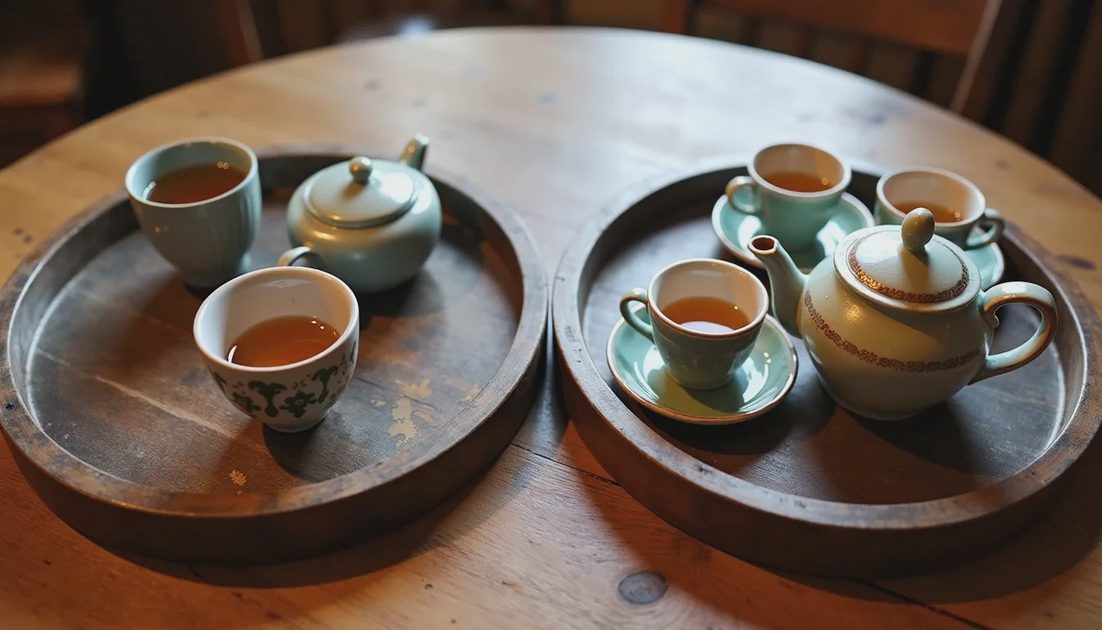
A tea tray looks like a minor object. It holds the pot, the cups, the strainer, sometimes the waste water. It protects the table. It makes carrying easier. Under that practical surface, the tray also organizes attention, defines a temporary space for tea, and quietly records how people choose to host one another.
Across cultures and centuries, trays and tray-like surfaces have framed the act of serving tea. Looking at them carefully reveals patterns of hospitality, class, mobility, and daily rhythm that larger narratives sometimes miss.
The Short Version
A tea tray creates a portable, bounded zone for tea service. It can signal formality or informality, protect furniture, organize tools, and make the difference between a scattered counter and a deliberate pause. The materials, size, and style of trays change with culture and period, but the underlying function—defining a space for the shared act of tea—remains remarkably consistent.
The Tray as a Defined Space
When tea tools are placed on a tray, they are temporarily separated from the rest of the table or room. That separation does subtle work. It tells everyone present that this small territory is currently for tea. Cups return to it. Spent leaf is managed within it. Spills are contained by it. The tray becomes a stage of manageable size.
In formal settings the stage can be elaborate: lacquered surfaces, carved edges, matching sets. In ordinary kitchens the stage may be a simple wooden board, a plastic convenience tray, or a large plate pressed into service. The aesthetic range is wide. The spatial function is similar.
This bounded zone also helps the host. Instead of hunting for the strainer or the second cup across a cluttered counter, the necessary objects stay in one mobile group. Hospitality becomes easier to execute when the tools of hospitality stay together.
Materials and What They Signal
Trays have been made from lacquer, wood, metal, bamboo, plastic, and ceramic. Material choice often reflects both practical needs and social messaging.
Lacquer and finely worked wood appear in many East Asian formal contexts, where the tray is part of the visual and tactile experience of service.
Metal trays have been common in various Middle Eastern, South Asian, and European settings, valued for durability and ease of cleaning.
Simple wooden or bamboo trays serve everyday Chinese gongfu setups and many contemporary Western tables.
Plastic and melamine trays prioritize function and spill resistance in busy or informal households.
None of these materials is inherently more “authentic” than the others. Each solves problems of weight, cost, maintenance, and appearance inside particular living conditions. A tray’s material is therefore historical evidence as well as practical choice.
Formality, Mobility, and Class
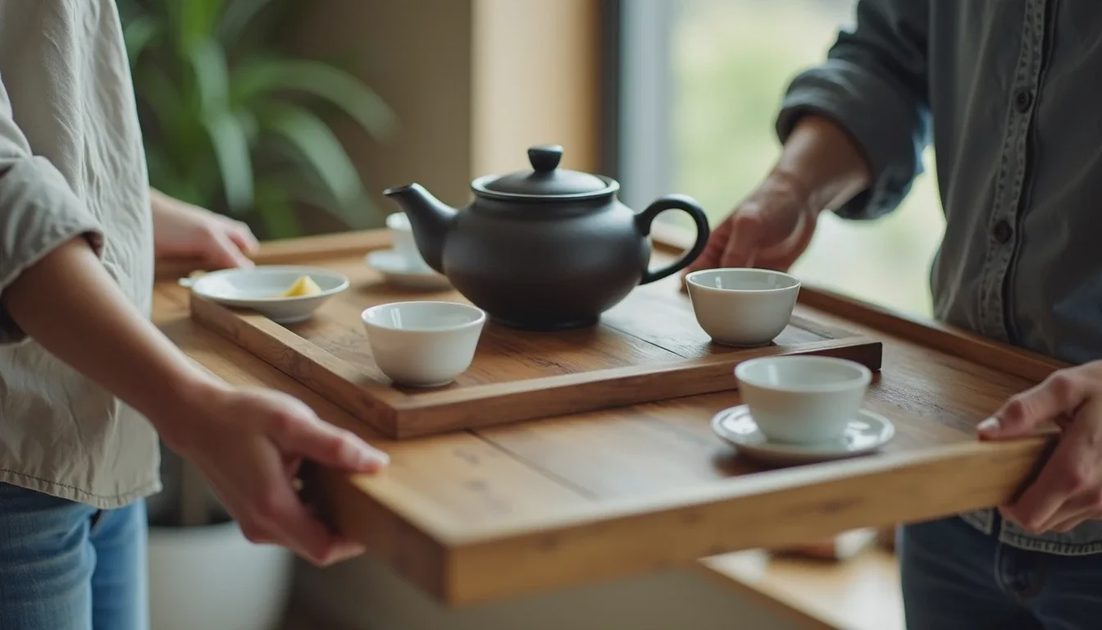
A large, heavy, highly decorated tray tends to stay in one place and support a more stationary, formal style of service. A lighter tray can move from kitchen to living room to outdoor table, supporting a more flexible, informal hospitality. The difference is not only aesthetic. It shapes how tea fits into the flow of a household.
In some historical European contexts, the tea tray (and the tea table it rested on) was part of the visible equipment of respectable domestic life. In other settings, tea was prepared and carried with minimal specialized furniture. The presence or absence of a dedicated tray often tracked with the degree to which tea service was meant to be seen and displayed.
Today the same continuum exists. A carefully arranged tray can turn a corner of a desk or a section of a kitchen counter into a deliberate tea moment. The object itself helps create the pause.
The Tray and Daily Rhythm
Beyond formal hosting, trays organize solitary or family tea habits. A personal tea tray left ready with a preferred pot and cup reduces the friction of daily preparation. The decision to drink tea becomes easier when the tools are already gathered. In this sense the tray is a modest piece of behavioral design: it makes the desired action more convenient than the alternatives.
Parents teaching children, partners sharing a quiet evening, or individuals marking the start or end of work often rely on this low-level organization without naming it. The tray holds the pattern in place.
What a Tray Records Over Time
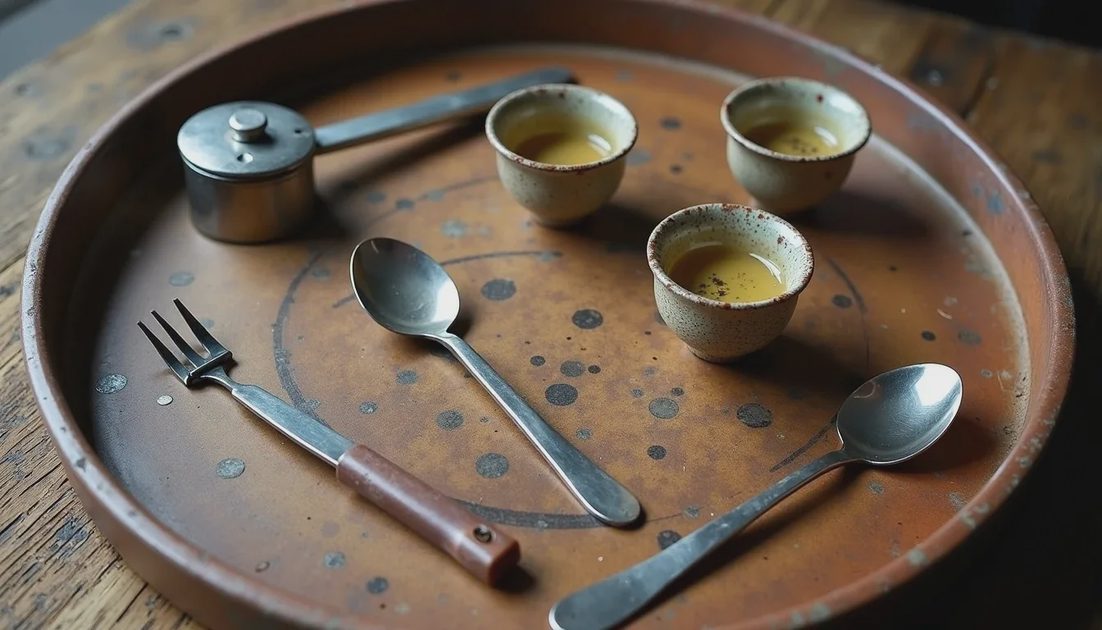
Scratches, stains, water rings, and worn edges accumulate. They form a quiet archive of use. A tray that has served for years carries the physical memory of previous sessions—some formal, some hurried, some solitary, some crowded. Unlike a purely decorative object, a working tray shows that hospitality and daily habit have actually occurred.
Collectors sometimes seek pristine examples. Everyday users often come to value the marks. Both stances are understandable. The marks simply make visible what the tray has already done.
Choosing and Using a Tray Today
Practical criteria remain straightforward:
Size large enough for your usual pot, cup, and small accessories
Surface that tolerates heat and occasional moisture
Weight you can carry comfortably when loaded
Style that does not fight the rest of your table or counter
An expensive antique is unnecessary for good function. A stable, easily cleaned tray that you actually use will do more for your tea life than a beautiful one that stays in a cupboard.
Final Thought
A tea tray is a small piece of architecture. It draws a temporary boundary around the act of preparing and sharing tea. Inside that boundary, hospitality becomes easier to practice and daily ritual becomes easier to sustain. The stories trays tell are rarely dramatic, but they are persistent: stories of attention offered, of pauses protected, and of the ordinary material support that makes those pauses possible.
Every cup has a history. Not every story is true. The quiet story of a tray that has held countless pots and cups, formal and informal, remains one of the truer records of how tea actually lives among people.
No comments yet — be the first to share a thought.