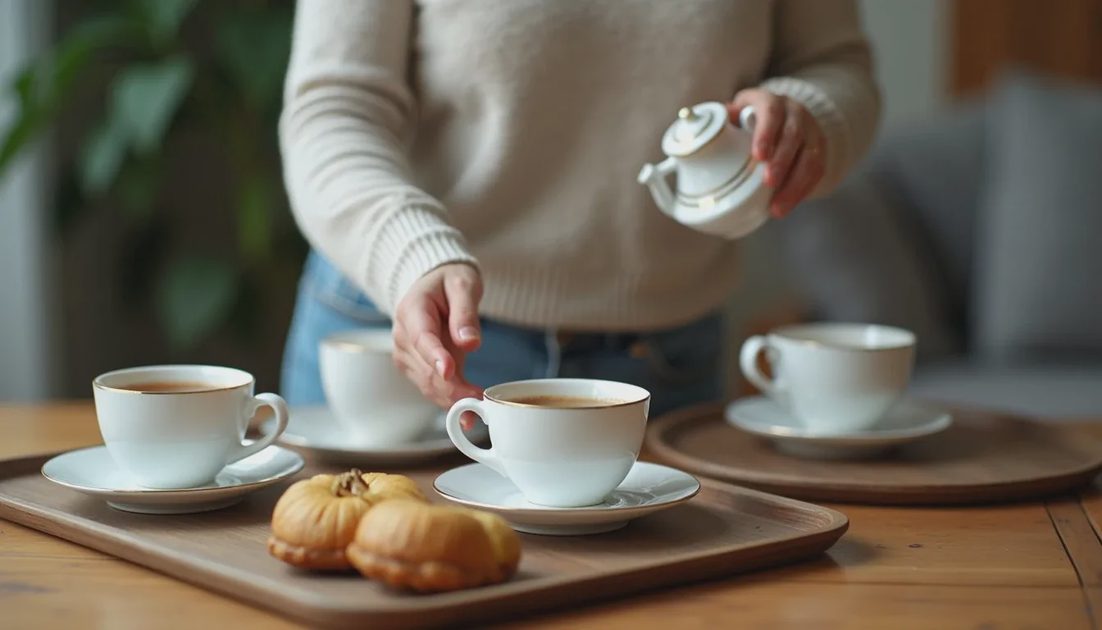
Tea etiquette has a reputation problem. It is often presented as a long list of precise rules that, if broken, reveal you as an outsider. That framing creates anxiety and obscures the real purpose of etiquette: reducing friction between people so that the shared experience stays pleasant.
Most everyday tea situations—home gatherings, casual tea shops, informal tastings, workplace breaks—run on ordinary consideration rather than specialized choreography. Learning a few underlying principles and common patterns is more useful than memorizing every possible rule from every tradition. This guide focuses on those practical principles.
The Short Version
Treat the tea and the other people present with basic attention. Follow the lead of the host when you are a guest. Communicate preferences clearly and calmly. Avoid turning the table into a stage for expertise or correction. These habits cover the majority of situations a beginner will encounter. Specialized formal rules belong to specific traditions and contexts; they are not universal requirements for drinking tea.
Principle 1: Attention to the Tea Itself
Good etiquette begins with not wasting or carelessly handling what has been prepared.
Accept a cup when it is offered unless you have a clear reason not to.
If you do not want more, say so politely rather than leaving a full cup untouched for a long period.
Avoid strong perfumes or heavily scented hand products that interfere with aroma when tasting is the focus.
Handle cups, pots, and utensils carefully enough that others do not have to worry about breakage or spills.
Do not treat the tea as a prop for performance; let it remain a beverage.
These are ordinary manners applied to a specific material context. They do not require specialized training or cultural certification.
Principle 2: Follow the Host’s Lead
When you are a guest, the host sets the tone and the level of formality. Matching that level is more important than performing a pre-learned script from a different tradition.
If the host pours, allow them to pour.
If the host invites you to add milk, sugar, lemon, or nothing, follow your preference without lengthy justification.
If the host offers a brief explanation of the tea, listen; if they do not, do not demand one.
If others are using particular utensils or a particular order of tasting, observe and adapt.
If the gathering is clearly casual, do not impose formal gestures or language.
Correcting the host or performing a more formal style than the occasion calls for creates the very awkwardness that etiquette is meant to prevent. The most respectful stance is usually the one that fits the room you are actually in.
Principle 3: Clarity About Preferences
Beginners often stay silent about milk, sugar, temperature, caffeine, or allergies because they fear seeming demanding. Clear, brief communication is more considerate than silent discomfort or later complaint.
Useful, low-drama phrases include:
“Yes, please, with a little milk.”
“Just plain is perfect for me.”
“I’m keeping caffeine modest today—do you have a lighter option?”
“I’ve had enough for now, thank you.”
“Could I try a small amount first?”
You do not need to explain your entire history with tea or defend your preferences. Short and specific is enough. Most hosts prefer accurate information to polite guessing.
Common Situations and Simple Responses
At a home gathering
Greet, accept or decline politely, follow seating if it is indicated, and participate in conversation. Offer to help only if it feels natural; accept the host’s answer either way. Leaving a small amount of tea in the cup is rarely a crisis; announcing that you are finished is clearer than waiting for the host to guess.
In a tea shop tasting
Listen to any guidance about order or method. Taste before adding milk or sugar if the point is to evaluate the tea. Share brief, honest impressions if asked. Avoid dominating the space with loud judgments or extended comparisons that center attention on yourself rather than the shared tasting.
When served an unfamiliar tea
You are not obligated to love it. A calm “Thank you, this is interesting” or “It’s different from what I usually drink” is sufficient. Detailed public critique is rarely required and often unwelcome.
When you make a mistake
Spill something, reach for the wrong utensil, or mishear a cue? Address the practical problem, apologize briefly if needed, and move on. Prolonged self-reprimand or elaborate explanation makes everyone more uncomfortable than the original error.

What Beginners Can Safely Ignore
Many detailed rules belong to specific formal traditions—certain schools of Japanese tea ceremony, highly structured British service, particular regional Chinese customs, or historical court practices. Those rules matter inside those contexts and repay careful study if you choose to pursue them. They do not automatically apply to a weekday kitchen, a workplace break room, a casual weekend invitation, or a modern tea shop counter.
Unless you are studying a formal practice or attending an event that explicitly follows one, you do not need to master specialized gesture sequences, prescribed phrases, historical costume, or the correct order of every possible utensil. Ordinary politeness plus attention is sufficient for the great majority of tea situations most people encounter.
Etiquette Toward Yourself
Anxiety about “doing it wrong” is itself one of the most common barriers for beginners. Treating your own learning process with ordinary patience is part of practical etiquette. You are allowed to be new. Most hosts and fellow drinkers are far more concerned with whether the atmosphere stays comfortable than with whether every detail matches a textbook from another century or another continent.
Perfection is not the standard. Presence and basic consideration are.

Final Thought
Useful tea etiquette is mostly invisible. It removes small sources of friction so that attention can stay on the people and the tea. When rules become the main subject of the gathering, something has already gone off track. The point of knowing a few principles is not to police others; it is to move through shared tea moments with less self-consciousness and more ease.
Every cup has a history. Not every story is true. The story that basic consideration is enough for most tea tables is one of the true ones worth keeping close.
No comments yet — be the first to share a thought.