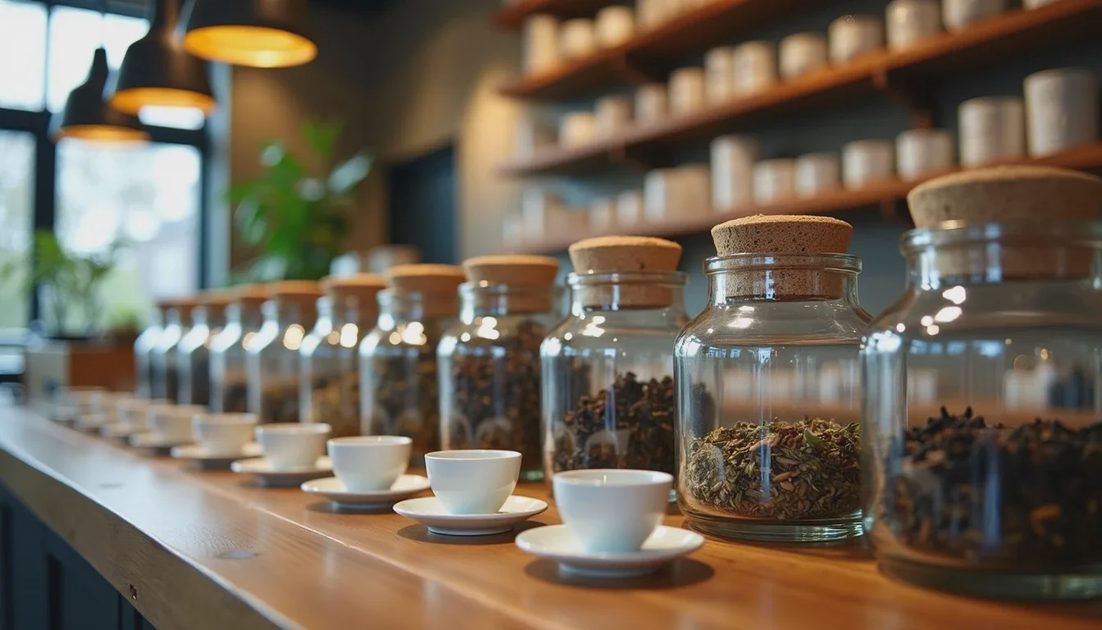
The first time you walk into a dedicated tea shop, the wall of canisters can feel like a test you did not study for.
Names are unfamiliar. Prices vary widely. Staff members may use terms you have only seen online. It is easy to default to whatever looks pretty or whatever the person next to you is buying. A slightly more deliberate approach usually produces a better first experience—and a higher chance that you will come back.
This guide is practical rather than encyclopedic. It focuses on the decisions that matter most when you are still learning your own preferences.
The Short Version
Start with one clear category you already think you might like, ask a few specific questions, examine the dry leaf, buy a small quantity, and treat the first sessions at home as information-gathering rather than a final judgment. You do not need to understand every tea on the shelf. You only need enough clarity to leave with something that matches your current taste and brewing setup.
Decide Your Starting Category Before You Go
If you already drink tea bags, use that experience as a rough compass:
If you like ordinary breakfast tea with milk, begin with a straightforward black tea.
If you prefer lighter, less astringent cups, consider a green tea or a lightly oxidized oolong.
If you want something gentle and simple, white tea is often forgiving.
If you are curious about deeper, earthier flavors, a ripe pu-erh can be an interesting first step.
You do not have to stay in that category forever. You only need a starting point so the shelf feels less infinite.
What to Ask the Staff
Good tea-shop staff expect questions. Useful ones include:
“I’m used to X kind of tea bag. What would be a good loose-leaf step from there?”
“How would you brew this for a beginner with a simple infuser or teapot?”
“Is this tea very sensitive to water temperature?”
“How fresh is this lot, and how should I store it at home?”
“Could I smell the dry leaf?”
Smell is underrated. If the dry leaf smells flat, dusty, or off, keep looking. If it smells lively and pleasant to you, that is useful data.
How to Look at the Dry Leaf
You do not need expert grading skills. A few visual checks help:
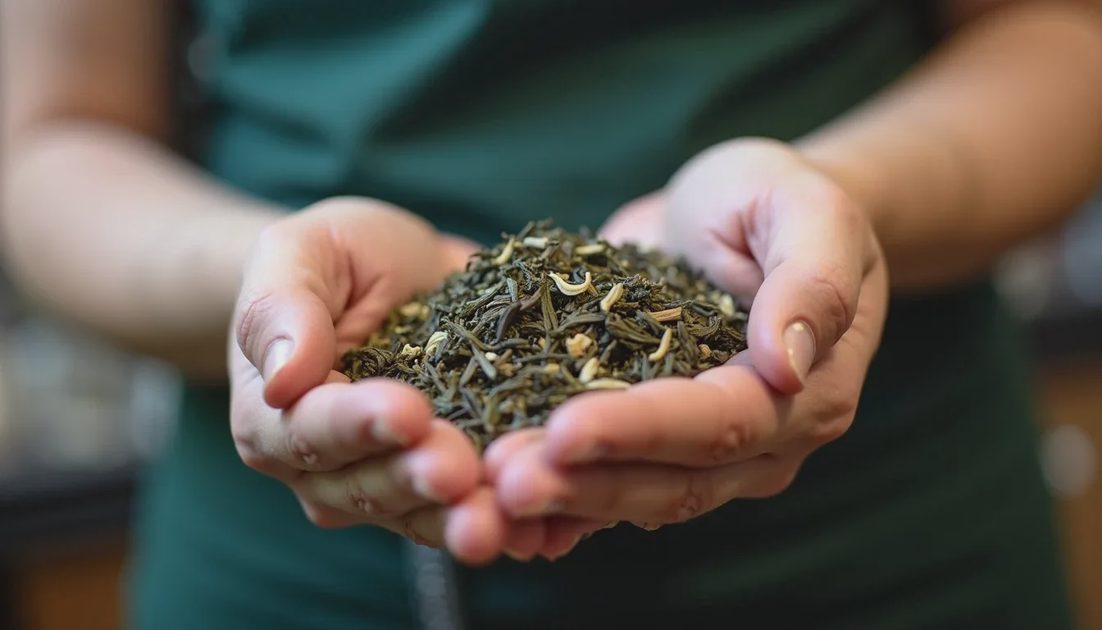
Whole or large broken leaves usually indicate more care than uniform dust.
Color should look appropriate to the category (green teas should not look brown; black teas should not look faded and dull).
Excessive stem or irregular debris can signal lower grade, though some styles naturally include different leaf parts.
Vacuum-sealed or well-sealed bulk containers are preferable to leaves sitting open in bright light for long periods.
If the shop offers small samples or weighs out small quantities, take advantage of that. A first purchase of 20–50 grams is almost always wiser than a large bag of something untested.
Match the Tea to Your Actual Equipment
Be honest about what you will use at home.
If you only have a basic mug and a mesh infuser, choose a tea that tolerates that method.
If you are willing to use a simple teapot or a gaiwan, more delicate or complex teas become realistic.
If you routinely add milk and sugar, a robust black tea is more practical than a delicate Chinese green.
There is no moral hierarchy here. The best first tea is the one you will actually brew and enjoy with the tools you already own.
Price, Quality, and Expectations
Higher price often reflects better leaf grade, more careful processing, or rarer origin. It does not automatically guarantee that you will like the tea. Conversely, very cheap bulk tea can be perfectly serviceable for everyday cups.
For a first loose-leaf purchase, a mid-range tea from a reputable shop is usually the sweet spot. You are buying information about your own palate as much as you are buying leaf.
Avoid the trap of equating “most expensive” with “best for a beginner.” Some high-end teas are subtle and reward experience; they can feel underwhelming or confusing if you are still calibrating your taste.
What to Do When You Get Home
Brew the tea within a reasonable time rather than saving it for a perfect moment. Use the shop’s suggested parameters as a starting point, then adjust:
If it tastes too bitter or astringent, lower the temperature or shorten the time.
If it tastes weak, add a little more leaf or increase time slightly.
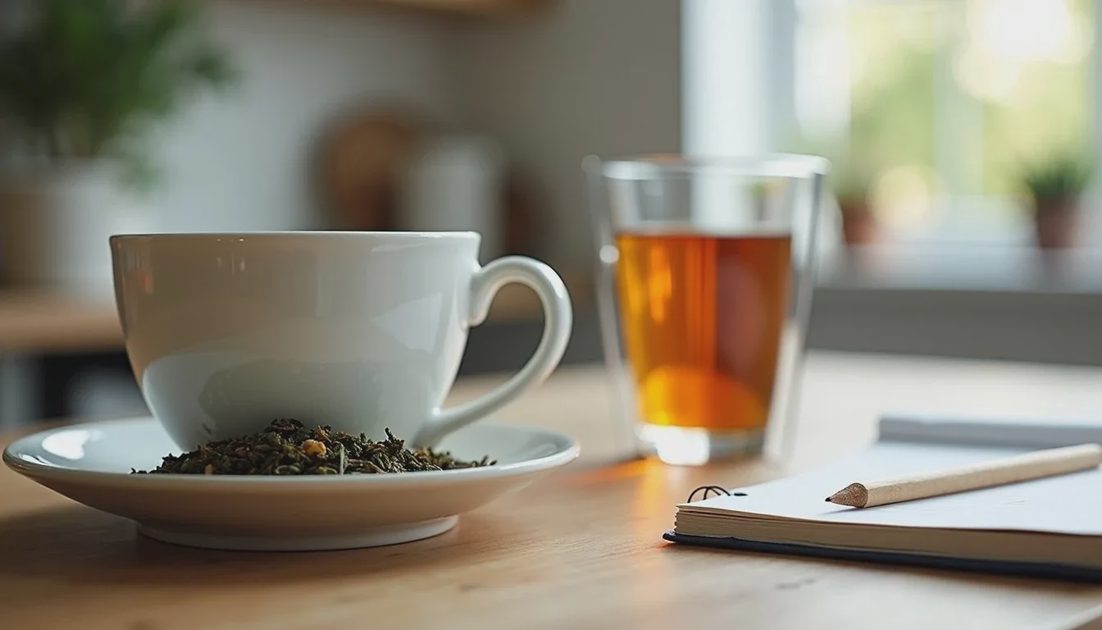
Note what you like and what you do not. That note is more valuable than any tasting wheel.
Store the tea away from heat, light, moisture, and strong odors. Most everyday teas do not improve with long storage; freshness matters.
Common First-Visit Mistakes
Buying too much of one unfamiliar tea.
Choosing purely by packaging aesthetics.
Feeling obligated to buy the most complex or expensive option.
Leaving without asking how to brew it.
Expecting the first cup to taste exactly like a tea-bag memory.
All of these are easy to avoid once you treat the visit as the beginning of a conversation with your own preferences rather than a test of expertise.
Final Thought
A good first loose-leaf purchase is not the rarest tea in the shop. It is the tea that matches your current taste closely enough that you want a second cup, and that teaches you something clear about what to try next. Start simply, ask direct questions, buy small, and let the cup give you data.
Every cup has a history. Not every story is true. Your own tasting notes, once you begin making them, become one of the true stories that matter most.
No comments yet — be the first to share a thought.