The history of tea is not one tidy origin story. It is a long record of plants, trade routes, cooking methods, religious practice, household labor, and changing ideas about hospitality. The short version is that tea began as a regional drink in Asia, traveled through commerce and empire, and became a familiar daily beverage around the world. The details are more interesting than the legend, especially when you notice how cups, kettles, gardens, and social habits changed together.
Where tea began
Tea comes from Camellia sinensis, an evergreen plant native to parts of East and South Asia. People in different regions likely used its leaves in several ways before a single “invention” of tea existed. Leaves could be eaten, added to broth, or prepared as a drink. The popular story that a ruler discovered tea when leaves blew into boiling water is charming, but it belongs more to cultural tradition than verifiable history.
Early written references connect tea drinking with the southwestern regions of what is now China. By the Tang period, roughly the seventh through tenth centuries, tea had become an established commodity and a subject of literature. A particularly important text was written by Lu Yu, whose work described cultivation, preparation, water, utensils, and manners. His writing helped frame tea as both an everyday drink and a cultivated art.
Tea was not initially prepared in the familiar modern way. Leaves were often steamed, compressed into cakes, stored, and then broken apart for use. Some preparations involved boiling the leaves with other ingredients, including salt or spices. Powdered tea later became prominent, while loose-leaf brewing developed into another influential method. These changes show why the history of tea cannot be reduced to a single recipe.
Tea, Buddhism, and Japan
Tea reached Japan through contacts with the Asian mainland, including travel by Buddhist monks and other educated visitors. By the twelfth century, powdered tea had become associated with monastic practice and elite culture. Preparing and drinking tea could support alertness during meditation, but it also became part of formal gatherings and political life.
The Japanese tea tradition that many Americans recognize today developed over centuries, not in one sudden moment. The practice called chanoyu, often translated as the way of tea, uses architecture, ceramics, gestures, seasonal decoration, and carefully paced hospitality. Its well-known ideals include attention, restraint, and respect for the people sharing the room. A small tea gathering is not simply a performance of expensive objects; the arrangement of a bowl, scoop, kettle, and sweets can express a host's care.
Matcha remains associated with this powdered tradition, while sencha represents a later and more common loose-leaf style. They are related but not interchangeable experiences. Matcha is whisked into water, whereas sencha leaves are infused and separated. Understanding that distinction makes the history of tea more practical: the tools and motions in a ritual developed partly from the form of tea being prepared.
China, Europe, and the rise of global trade
Loose-leaf tea became increasingly important in China during later periods, and regional processing methods produced green, oolong, black, and fermented teas. These categories describe processing rather than a simple ladder of quality. Withering, rolling, oxidation, roasting, steaming, and aging all influence the final character of a leaf.
European merchants encountered tea through expanding trade networks in the sixteenth and seventeenth centuries. Tea entered European elite households as an expensive import, often served in small cups because the supply was limited and the drink was associated with refinement. The Dutch played an early role in bringing tea into European markets, while English demand eventually became especially powerful.
The history of tea in Europe is also a history of taxation and politics. In Britain, tea became a major household product, but duties encouraged smuggling and made the drink a target of political debate. The Boston Tea Party in 1773 was a protest against taxation and colonial representation, not merely a dramatic act of dislike toward tea. That event helped make tea part of the political vocabulary of early American history.

How British tea customs developed
The familiar British afternoon tea is often presented as an ancient national ritual, but it is comparatively modern. The custom of serving tea with small foods between lunch and dinner became fashionable in the nineteenth century. Earlier tea drinking could involve breakfast, social visits, or formal receptions, while working households adapted the beverage to their own schedules and budgets.
Milk, sugar, porcelain, silver, and layered serving stands all carry economic history. Sugar became more widely available through colonial trade, while ceramic manufacturers developed specialized wares for a growing market. Tea gardens, hotels, and domestic parlors turned tea into a setting for conversation and display. Yet there was never one universal British tea table. Class, region, income, and household preference shaped what people actually drank and ate.
This is useful context for modern hosts. Serving black tea with milk is one tradition, not the only tradition. Green tea, oolong, herbal infusions, and iced tea can all belong at a contemporary table without pretending to reproduce a nineteenth-century scene.
Tea in the United States
In the United States, tea has always existed alongside coffee, local ingredients, immigration, trade, and regional taste. Iced tea became particularly associated with the American South, where sweetened versions remain part of everyday food culture. Commercial tea bags, introduced in the early twentieth century through a mixture of experimentation and consumer convenience, changed how many households brewed.
Tea bags did not erase tea culture; they made it faster and more portable. Loose-leaf tea, matcha, chai, bottled tea, and specialty blends now share grocery shelves and café menus. A commuter with a mug, a family serving iced tea at a cookout, and a host using a small teapot are all participating in different modern branches of the same broad story.
The history of tea in America also includes labor and agriculture. Tea plants have been grown in the United States on a small scale, but most American tea consumption depends on imported leaves and international supply chains. Looking at packaging, origin information, harvest season, and processing can reveal more than a vague label such as “traditional.”
What the history of tea can teach today
Studying the history of tea helps separate useful tradition from invented certainty. There is no single correct cup, and no ritual becomes more meaningful simply because it uses costly equipment. A basic kettle, a mug, and fresh water are enough to begin. If you want a more focused experience, try comparing a Japanese sencha, a Chinese oolong, an Indian black tea, and a British-style blend while keeping the water temperature and steeping time appropriate to each leaf.
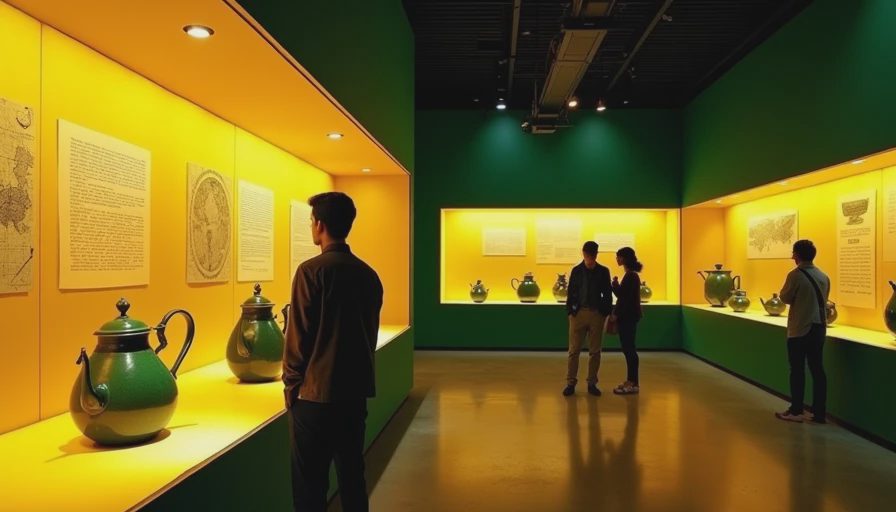
Pay attention to objects as well as flavor. A gaiwan encourages short repeated infusions. A kyusu is designed for handling Japanese green tea. A large teapot suits a household breakfast or shared table. These tools are practical evidence of how people brewed, served, and valued tea in different places.
The history of tea also invites patience with uncertainty. Popular stories often compress centuries into one dramatic discovery, while real traditions develop through many hands and adaptations. Every cup has a history. Not every story is true. The best way to enjoy tea is to remain curious, learn where a practice comes from, and make room for new habits in your own kitchen.

No comments yet — be the first to share a thought.