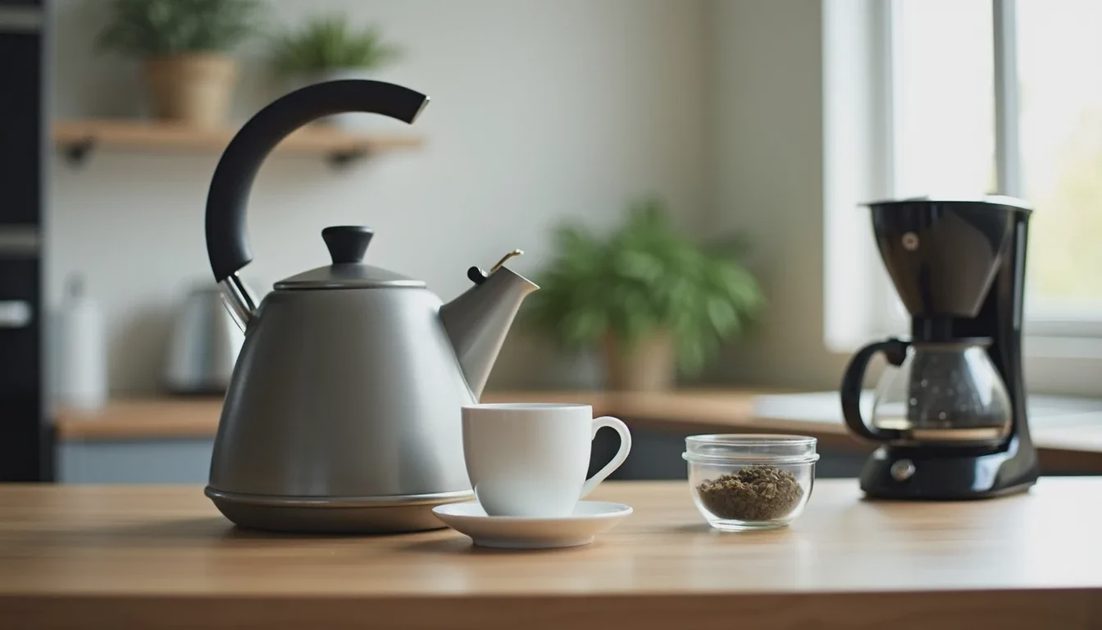
If you already have a coffee routine that works, tea can feel like an interruption rather than an addition.
Many tea guides assume unlimited counter space, a free half-hour, and a desire to master new equipment. Most coffee drinkers have none of those things consistently. What they do have is an existing habit of heating water, measuring something, and pausing—however briefly—before the day accelerates. That existing habit is enough to build on. You do not need a new personality, a dedicated tea room, or a deep background in Asian or British tea culture. You only need a parallel sequence that is simple enough to repeat on ordinary days.
This post lays out a deliberately modest ritual designed for people whose primary hot-drink habit is already coffee. The goal is consistency first, nuance later.
The Short Version
Create a parallel tea ritual that uses the same basic shape as your coffee routine: heat water, measure leaf, steep for a fixed short time, drink from a favorite cup. Keep the variables few, the equipment minimal, and the expectation realistic. The goal is a repeatable pause, not a new identity or a performance of expertise.
Why Coffee Drinkers Often Stall with Tea
Several common friction points stop the experiment before it becomes a habit:
Too many parameters appear at once—temperature charts, multiple infusions, specialized vessels, timing rules that seem to contradict each other.
Quantity is unclear. Coffee culture has familiar ratios; tea advice often feels vague or overly precise.
Many teas turn bitter or harsh when treated exactly like coffee (boiling water, long steep, large mug).
There is a lingering sense that “real” tea requires ceremony, silence, or special knowledge, which makes a quick weekday cup feel illegitimate.
All of these are solvable with a simplified approach that protects the habit first and introduces complexity only after the sequence feels automatic.
The Minimal Equipment List
You need far less than most aspirational tea photography suggests:
A kettle (the one you already use for coffee or instant food is fine)
A simple mesh infuser, basket infuser, or small teapot
A cup you genuinely like holding
One or two teas that tolerate straightforward brewing
That is the entire required setup. A thermometer, a scale, a gaiwan, or a timer beyond your phone are optional upgrades for later. Starting with equipment you already own removes the most common early barrier: the feeling that you must buy things before you are allowed to begin.
Choosing the Right First Teas
Pick teas that forgive small inconsistencies in temperature and timing. Confidence comes before refinement.
Strong everyday options include:
A solid breakfast-style black tea if you like robust flavor and the possibility of milk or sweetener
A straightforward Chinese green tea or a basic Japanese sencha if you prefer lighter cups and are willing to let boiled water cool for a minute or two
A lightly oxidized oolong if you want noticeable aroma without complicated technique
Avoid, at the very beginning, extremely delicate greens, expensive aged pu-erhs, or any tea whose description emphasizes “precise temperature control” or “multiple short infusions required.” Those teas can be wonderful later. They are poor teachers when the habit itself is still fragile.
Buy small quantities. Twenty to forty grams is enough to decide whether a tea deserves a regular place in your routine.
A Concrete Daily Method
Use the same shape every time so the sequence becomes automatic:
Heat water in the kettle you already own.
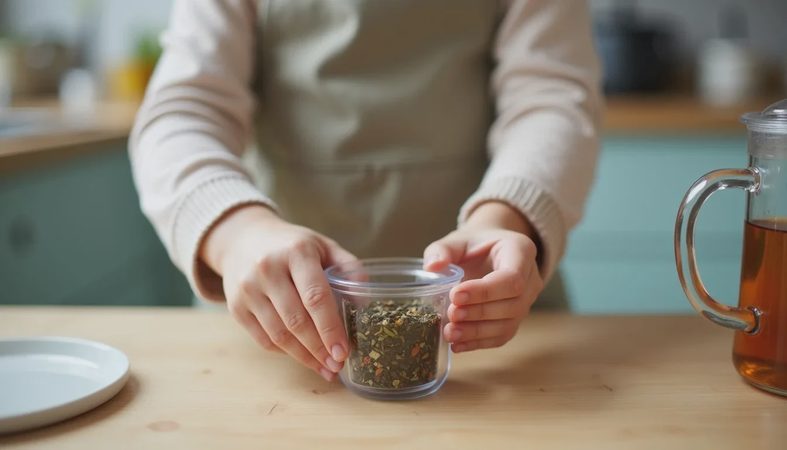
Place a measured amount of leaf in the infuser or pot. Start with one rounded teaspoon per standard mug and adjust by taste over the next few days.
Pour the water. For most black teas, water near boiling is appropriate. For green teas, wait one to two minutes off the boil.
Set a simple timer for two to four minutes depending on the tea and your preference.
Remove the leaf promptly.
Drink from a cup you enjoy.
The entire sequence can fit inside the same window you already protect for coffee. You are not adding a new block of time so much as creating a parallel track that uses familiar motions.
If the first cup tastes too weak, increase the leaf slightly next time. If it tastes too strong or astringent, reduce time or temperature. Treat each adjustment as data, not failure.
Making It Feel Like a Ritual Rather Than Another Task
Ritual does not require special clothing, silence, or a perfectly cleared counter. It requires a small, repeated structure that marks a transition in the day.
Optional anchors that help many people:
Using the same cup each time
Standing in the same spot at the counter or sitting in the same chair
Taking one deliberate breath or simply looking out the window while the tea steeps
Writing a single line in a phone note or paper notebook about how it tasted
None of these are mandatory. The only essential element is that the sequence happens often enough to become familiar. Familiarity is what turns a new behavior into a ritual instead of a recurring decision that drains willpower.
Adapting the Ritual to Different Parts of the Day
Morning
Treat tea as a parallel to coffee rather than a replacement unless you want it to replace it. Some people alternate days. Others drink coffee first and add a tea later in the morning. Others switch entirely once the tea habit feels solid. All three approaches work.
Afternoon
A lighter tea can serve as a reset without the intensity of additional coffee. This is often the easiest place for former exclusive coffee drinkers to notice the difference in how they feel an hour later.
Evening
If caffeine is a concern, keep the ritual shape and change the leaf. A naturally lower-caffeine tea or a well-chosen herbal prepared with the same care preserves the pause even when the stimulant content changes. The body learns the sequence; the specific leaf can vary.

What Success Actually Looks Like
Success is not mastering every category of tea or being able to discuss oxidation levels at a party. Success is reaching for the kettle and the tea container with the same automatic quality that you currently reach for coffee. Once that motion exists, curiosity has a stable place to land. You can then explore better water temperature control, multiple infusions, new styles, or better equipment without the whole practice collapsing under its own complexity.
Many coffee drinkers abandon tea because they begin with the most demanding version of the practice. Starting with a deliberately modest version produces the opposite result: a habit sturdy enough to support later interest.
Troubleshooting Common Early Frustrations
“It tastes weak compared with coffee.”
Increase leaf quantity or steep a little longer. Tea and coffee deliver flavor differently; matching intensity often requires more leaf than beginners expect.“It turns bitter.”
Lower the water temperature or shorten the time. Bitterness is usually an extraction problem, not proof that you dislike tea.“I keep skipping it.”
Reduce friction further. Pre-measure a few days of leaf into small containers, or keep the tea and infuser directly next to the kettle.“I’m not sure I’m doing it right.”
If the cup tastes pleasant to you and the sequence is repeatable, you are doing it right. Refinement can come later.
Final Thought
Tea does not need to replace coffee or demand a new aesthetic. It only needs a realistic doorway into your existing day. A simple, repeatable sequence—heat, measure, steep, drink—is enough to begin. The rest can grow later, if and when you want it to.
Every cup has a history. Not every story is true. The story that you can build a workable tea habit without overhauling your life is one of the true ones worth keeping.

No comments yet — be the first to share a thought.