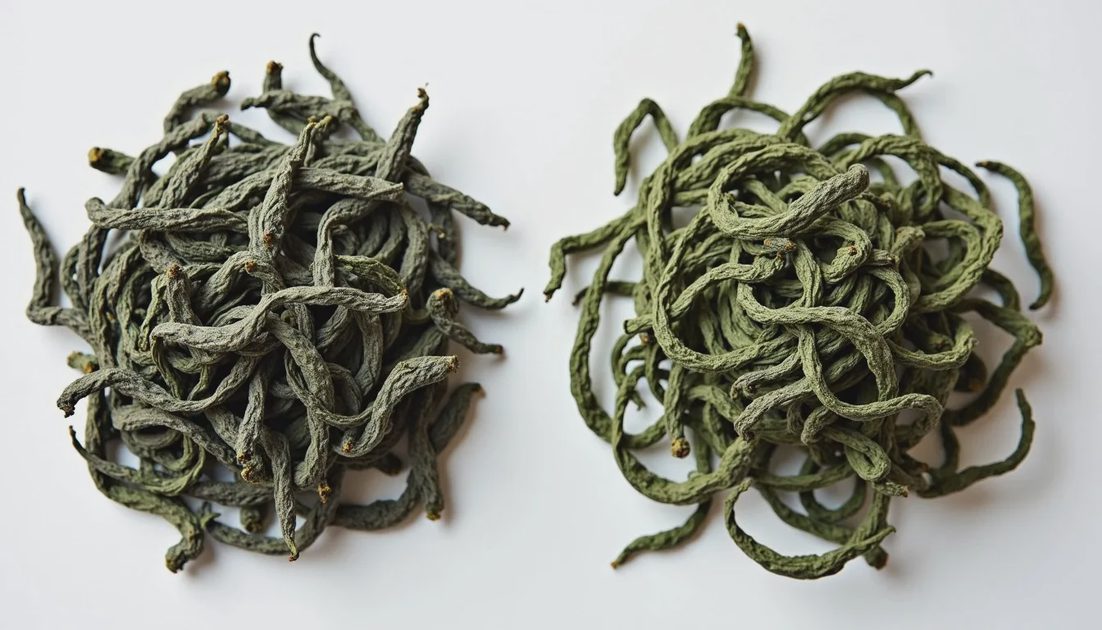
Oolong is the category that confuses the most beginners—and rewards them the most once the map becomes clear.
The name (wulong in pinyin) covers teas that are partially oxidized, sitting between green and black tea on the processing spectrum. That middle zone is wide. Lightly oxidized oolongs can taste almost like floral green teas; heavily oxidized and roasted ones can approach the depth of black tea. Between those poles lies an enormous range of aroma, texture, and flavor.
This guide gives you a practical framework rather than an exhaustive list of every named variety.
The Short Version
Oolong teas are made from Camellia sinensis leaves that are withered, bruised to start oxidation, allowed to oxidize only partway, then heated to stop the process and shaped. The result is a family of teas known for complex aromas and the ability to handle multiple infusions. Major style clusters come from southern China (Fujian and Guangdong) and Taiwan.
What “Partial Oxidation” Means in Practice
After picking, leaves are withered to reduce moisture. They are then shaken, tumbled, or rolled so that edges bruise and oxidation begins. The tea maker monitors color, aroma, and timing, then applies heat to halt the reactions at the desired point. Later steps may include rolling into tight balls or long twists, additional roasting, and final drying.
The degree of oxidation and the amount of roast are two of the biggest variables that define style. Cultivar, altitude, season, and specific skill create further differences.
Major Style Families for Beginners
Lightly Oxidized, Floral Oolongs
Many Taiwanese high-mountain oolongs and some modern Anxi styles fall here. The leaf is often rolled into tight balls that expand dramatically in water. Aromas tend toward fresh flowers, cream, butter, or light fruit. The cup is usually smooth and fragrant rather than heavy.
These are approachable entry points if you enjoy green tea but want more aroma complexity.
Traditional Anxi Tieguanyin and Related Styles
Tieguanyin from Anxi, Fujian, has historically ranged from lightly oxidized to more roasted expressions. Older-style roasted tieguanyin offers deeper, toasty, sometimes mineral notes. Newer market styles often emphasize high floral fragrance and greener character. Knowing which expression you are buying matters.
Wuyi Rock Oolongs (Yancha)
From the Wuyi Mountains in northern Fujian, these teas are usually more heavily oxidized and roasted. They are known for a distinctive mineral quality often called “rock rhyme,” along with toasted, cocoa, dried-fruit, or dark-floral notes. Leaves are typically long and twisted rather than ball-rolled. They respond well to repeated short infusions in a small vessel.
Phoenix Dancong (Fenghuang Dancong)
From Guangdong, these oolongs are famous for striking natural fruit and flower aromas—sometimes described as natural “fragrance types.” Oxidation and roast levels vary, but the aromatic intensity is a hallmark. They can be among the most perfumed teas a beginner will encounter.
Other Regional and Modern Styles
Taiwan produces a wide range beyond high-mountain styles, including Dong Ding and Oriental Beauty (Baihao Oolong), the latter with distinctive honeyed and fruit notes linked to leafhopper activity. Mainland China and other regions continue to innovate. The core map above covers the styles you are most likely to meet first.
How to Brew Oolong so the Style Shows
Oolongs generally shine with:
Good quality water
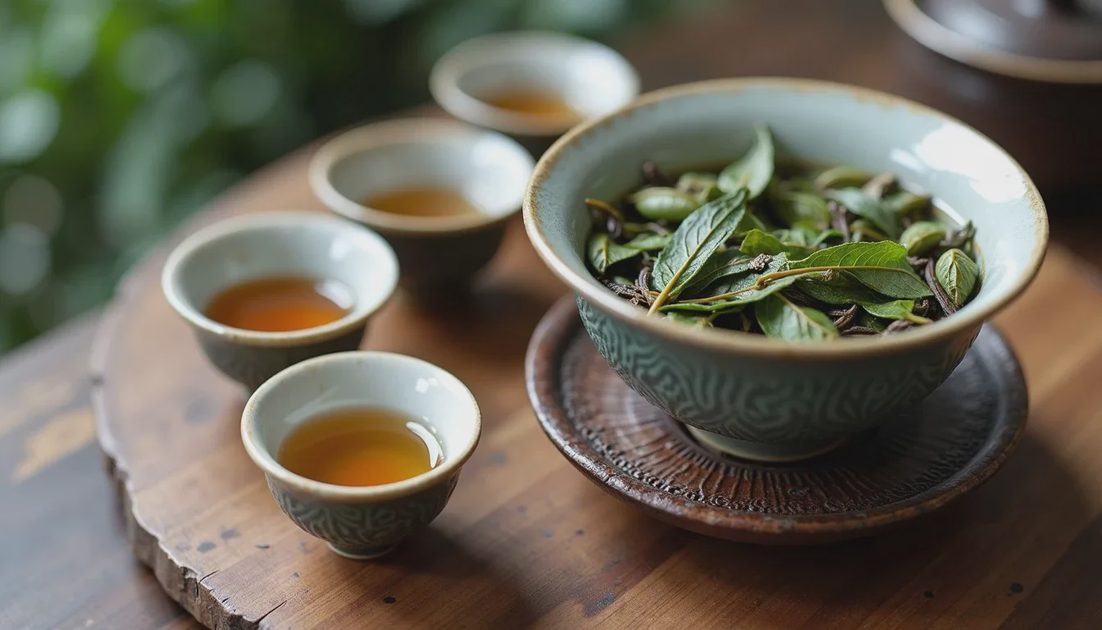
A vessel that allows the leaf to open (gaiwan or small teapot)
Multiple short infusions rather than one long steep
Water hot enough to open the leaf (often near boiling for roasted styles, slightly cooler for very light ones)
The first infusion may be brief; subsequent infusions can be adjusted as the leaf opens and the flavor evolves. This progression is part of the pleasure of the category.
Practical Starting Path for Beginners
Try one lightly oxidized, floral Taiwanese or modern Anxi oolong.
Try one traditional roasted Wuyi rock oolong.
Compare the two side by side if possible.
Notice differences in aroma, body, aftertaste, and how the cup changes across infusions. That single comparison teaches more than reading a long list of names.
When shopping, look for clear information about origin and style rather than vague terms like “premium oolong.” A trusted vendor who can describe oxidation level and roast is more helpful than an impressive but empty label.
Common Beginner Confusions
“Oolong is always floral.”
Only some styles emphasize flowers. Roasted and mineral styles are equally representative of the category.“More expensive is always better.”
Price can reflect rarity, altitude, or craft, but it is not a guarantee of enjoyment. Your palate is the final judge.“Oolong must be brewed in a special vessel.”
A gaiwan or small teapot helps, but a clean mug and careful timing can still reveal a great deal while you learn.
Final Thought
Oolong is less a single taste than a spectrum controlled by oxidation, roast, cultivar, and craft. Once you grasp that spectrum, the category becomes inviting rather than intimidating. Start with two contrasting styles, brew them with attention, and let the cups teach you the rest.
Every cup has a history. Not every story is true. The processing story of oolong is one of the most useful true stories you can learn.
No comments yet — be the first to share a thought.