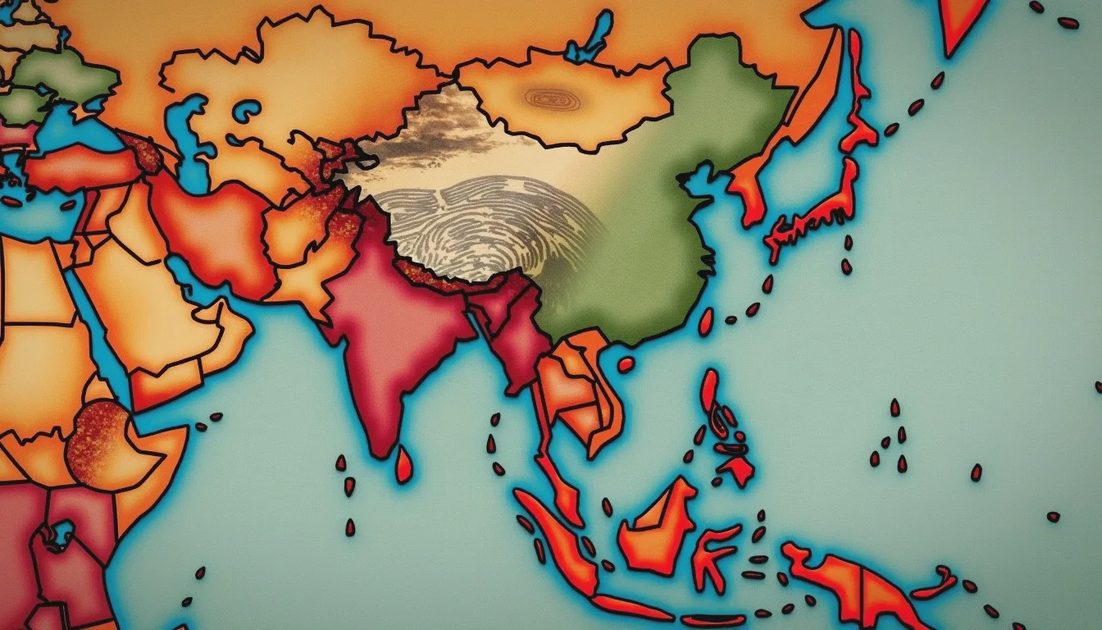
Tea is so deeply embedded in daily life across the globe that it is easy to forget it had to travel.
The plant Camellia sinensis is native to a broad region that includes parts of what is now southwestern China and neighboring areas. The practices of processing leaves, drinking the resulting liquid, and attaching social meaning to the act developed over centuries inside Chinese cultural spheres before moving outward. Those movements were not smooth or inevitable. They followed trade routes, political decisions, religious networks, colonial systems, and ordinary human curiosity.
Understanding the major pathways helps explain why tea cultures look so different today—and why some popular origin stories need revising.
The Short Version
Tea spread from China through a combination of overland trade, maritime commerce, diplomatic and religious exchange, and later colonial plantation systems. Each receiving culture adapted the leaf, the tools, and the rituals to local conditions. The result is not a single global tea culture but a family of related yet distinct traditions.
Early Movements Inside and Beyond China
Within China itself, tea drinking expanded over many centuries from regional practices to wider elite and then popular use. By the Tang dynasty (618–907), tea was already a significant cultural and commercial product. Lu Yu’s Classic of Tea (late 8th century) codified much of the knowledge of the time and helped elevate tea as a subject worthy of scholarly attention.
Overland routes carried tea westward and northward. The tea-horse trade with Tibetan regions and the movement of tea along routes connected to Central Asia are well documented. In these exchanges, tea often traveled in compressed forms suited to long-distance transport—bricks or cakes that could be broken, boiled, and mixed with other ingredients.
Maritime routes later became equally important. Chinese coastal trade and the activities of merchants connected tea to Southeast Asia and, eventually, to wider Indian Ocean networks.
Tea Reaches Japan and Korea
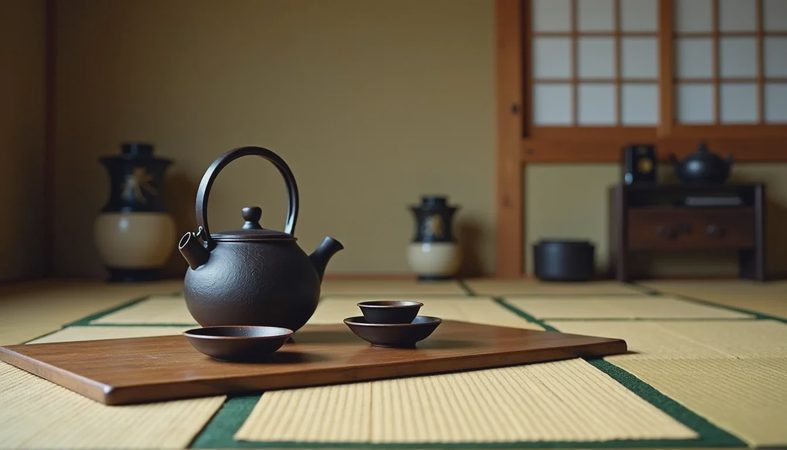
Tea reached the Japanese archipelago through multiple channels of cultural and religious exchange with China, particularly in connection with Buddhist monks and scholarly missions. By the Heian period, tea was known in elite circles. Over subsequent centuries it developed into distinct Japanese practices, most famously the highly formalized tea ceremony (chanoyu) associated with Zen aesthetics and the work of figures such as Sen no Rikyū in the late 16th century.
The Japanese story is often told as a pure transmission of Chinese tradition. The historical record shows adaptation, selective emphasis, and local innovation. What became “Japanese tea ceremony” is a Japanese cultural formation that drew on earlier continental sources while developing its own philosophy, architecture, utensils, and social meaning.
Korean tea culture followed related but distinct paths, with its own periods of flourishing, decline, and revival.
Tea Enters Europe
European encounter with tea is relatively late. Portuguese and Dutch traders brought knowledge and small quantities of tea to Europe in the 16th and early 17th centuries. The Dutch East India Company played an early role in commercial importation. In England, tea moved from an exotic curiosity among the wealthy in the mid-17th century to a more widespread commodity over the following decades.
The British story is especially well documented because of the East India Company’s records, tax debates, and the eventual decision to develop tea plantations in colonial India and Ceylon (Sri Lanka) after Chinese sources became politically complicated. The Boston Tea Party of 1773 is only one dramatic moment in a much longer commercial and political history.
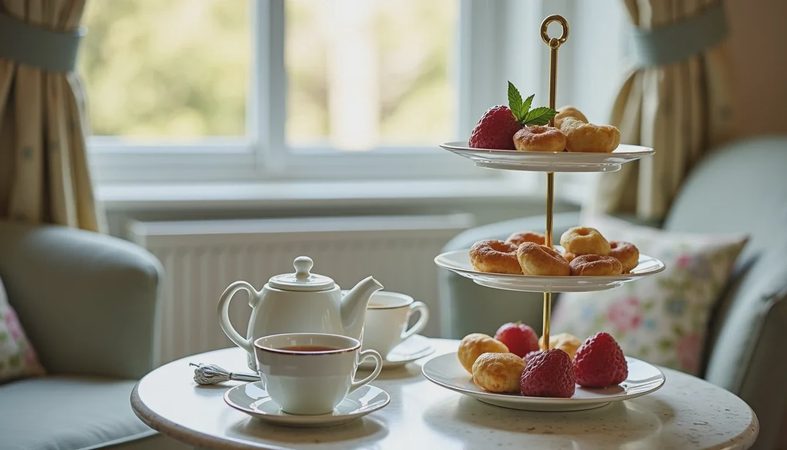
European adoption did not simply copy Chinese practice. Brewing methods, serving vessels, meal contexts (afternoon tea, for example), and social meanings were reshaped to fit local habits and class structures.

Colonial Plantations and Global Commodity Status
By the 19th century, tea had become a global commodity. British colonial projects in Assam and later other parts of India, together with production in Ceylon and elsewhere, dramatically increased supply and changed the economic geography of tea. These systems relied on large-scale agriculture, often under coercive labor conditions, and produced teas oriented toward European and colonial markets.
The result was a further diversification of styles, processing methods, and price points. Many of the black teas familiar to American supermarket shelves today descend from this colonial-era expansion rather than from the earlier Chinese literati traditions.
What the Travel Story Teaches Us
Three practical points emerge from the historical movement of tea:
Adaptation is normal. Every culture that adopted tea changed it. Expecting a single “authentic” preparation is historically unrealistic.
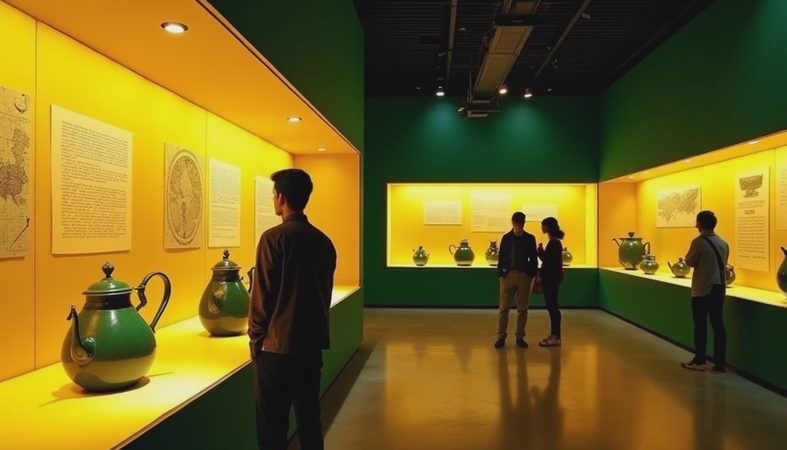
Objects traveled with the leaf. Teapots, cups, processing tools, and storage methods moved along the same routes and were modified locally.
Stories simplify. National origin myths and marketing narratives often compress centuries of exchange into a single elegant tale. The archival and material record is usually more complicated—and more interesting.
Practical Takeaway for the Modern Reader
When you choose a tea or a brewing method today, you are participating in a long chain of movement and adaptation. Knowing the broad outline of how tea traveled helps you read labels, histories, and claims more carefully. It also frees you from the pressure to perform one “correct” tradition. You can appreciate Chinese, Japanese, British, Indian, and other practices on their own terms while deciding what works in your own kitchen.
Every cup has a history. Not every story is true. The travel history of tea is one of the clearest places to see the difference.

No comments yet — be the first to share a thought.