
The short version of how to store matcha green tea is to keep it airtight, cool, dry, and away from light and strong smells. Refrigeration is a good choice, especially for an unopened package or a warm kitchen. Once the container comes out of the fridge, let it reach room temperature before opening it; that simple pause helps prevent moisture from collecting on the powder.
Matcha is finely ground green tea, so a great deal of its surface is exposed to air. That makes careful storage worthwhile: heat, light, oxygen, and moisture can diminish its color and flavor. You do not need a special tea cabinet, though. A well-sealed container and a little attention to temperature will do most of the work.
Choose a container that protects the powder
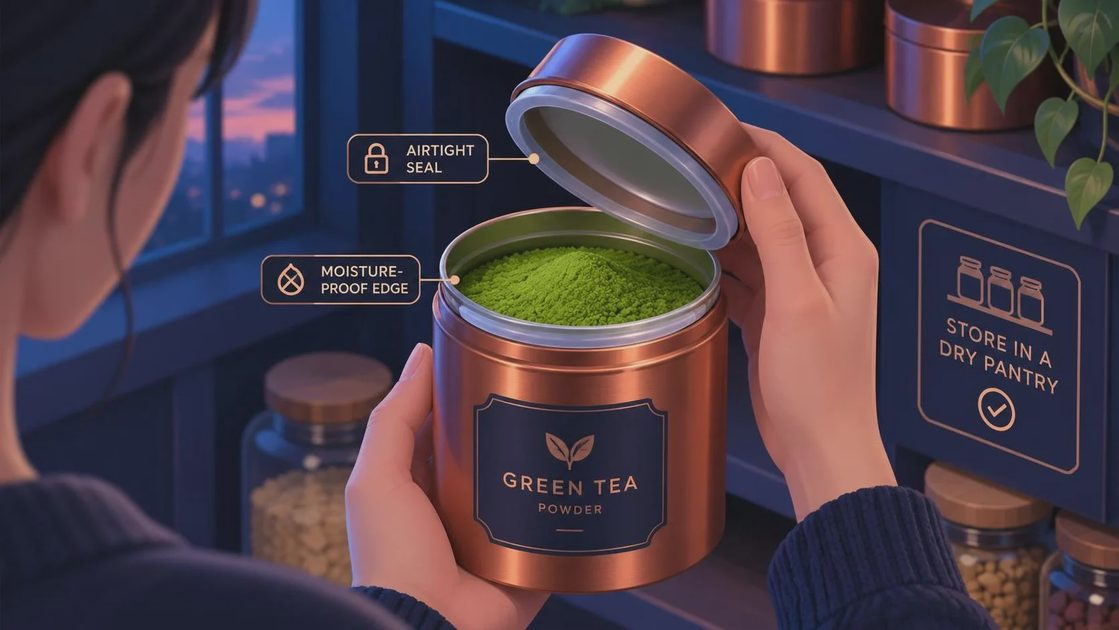
The original tin or resealable pouch can work well if it closes securely. Press excess air out of a pouch before sealing it, without crushing the powder through the opening. If the package is torn or the seal no longer holds, transfer the matcha to a clean, dry, airtight container.
An opaque tin is useful because it keeps out light. A glass jar with a tight lid can also work if you put it inside a cupboard or another opaque container. In either case, choose a vessel close to the amount of tea you have; a small quantity rattling around in a large jar has more air around it than necessary.
Wash a reused container thoroughly and allow it to dry completely before filling it. Matcha can pick up lingering smells, so I would avoid a jar that still carries the scent of coffee, spices, or flavored tea. Keep the scoop dry, too, and never dip a damp spoon into the powder.
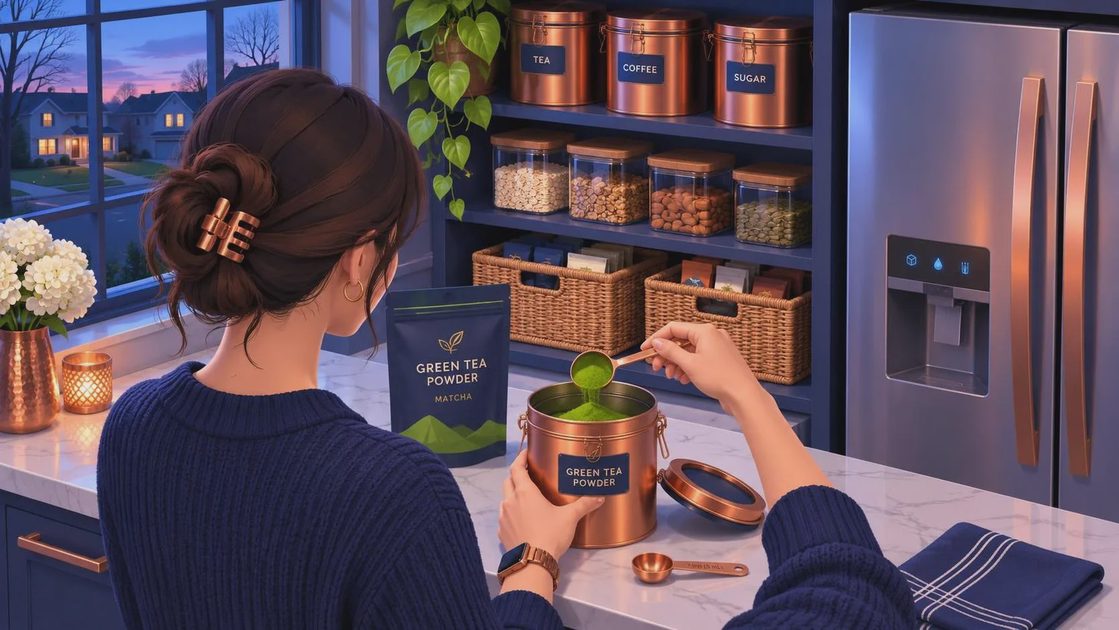
How to store matcha green tea in the refrigerator
The refrigerator provides a cool, dark environment, but it is also a place where containers encounter moisture and food odors. Seal the matcha tightly, then place its tin or pouch inside a second airtight container or sealed food-storage bag. Keep it away from fragrant foods when you can.
Before opening refrigerated matcha, leave the sealed package on the counter until it reaches room temperature. The waiting time depends on the size and temperature of the container; a small tin will generally warm faster than a large package. Opening it while it is still cold can allow moisture from the warmer room air to condense inside.
If you drink matcha daily, repeated warming and cooling may be inconvenient. One practical approach is to divide it into a small, airtight container for regular use and a well-sealed reserve for the refrigerator. Make the transfer when the tea and containers are dry and at room temperature. Keep the daily portion in a cool, dark cupboard and refill it from the reserve as needed.
An unopened package deserves the same care when it comes out of cold storage: let it warm while still sealed before breaking the seal. Follow the producer's storage instructions if they differ, especially for an individual package with specific handling directions.
Is a cupboard or freezer a better choice?
A cupboard is perfectly reasonable for a small amount you expect to use soon, particularly if your kitchen stays cool. Choose a spot away from the stove, dishwasher, sunny window, and other sources of heat or steam. A shelf directly above the kettle is convenient but not kind to delicate powder.
Freezing can be useful for longer-term storage of a sealed reserve, but it takes more planning than refrigeration. Use an airtight, freezer-safe package with a protective outer layer, and divide a larger supply into portions before freezing. Thaw each portion completely while it remains sealed, then open it only when it has reached room temperature. Avoid repeatedly moving the same open container in and out of the freezer.
For most households, the choice is less about finding a perfect temperature than about reducing exposure. A small tin in a cool cupboard may be more practical than a large container that gets opened cold every morning.
How long does matcha stay fresh?
Start with the date and instructions on the package. A best-by date is a quality guide, not a precise moment when the tea suddenly becomes unsafe. Storage conditions and how often the package is opened matter, too. Once opened, matcha is generally best enjoyed sooner rather than saved for a special occasion months away.
Buy an amount that fits your routine. If you whisk a bowl only occasionally, a small package gives you a better chance of finishing it while its flavor is lively. If you use it regularly in drinks or baking, a larger package may make sense, especially if you divide and store it carefully.
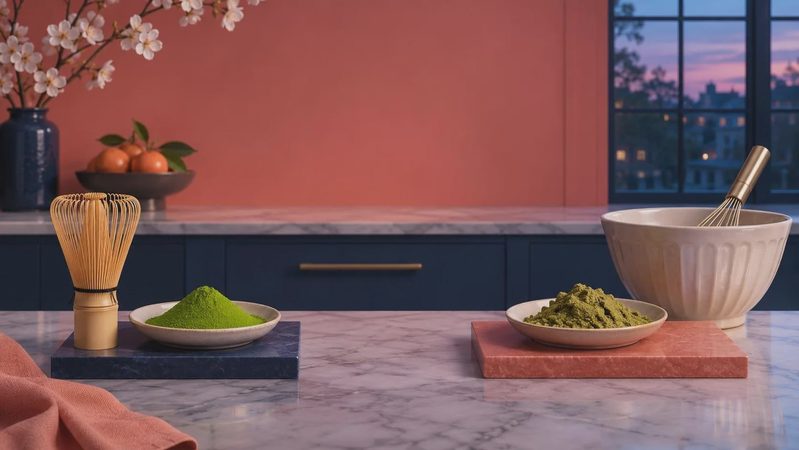
As matcha ages, its green color can become duller and its aroma less fresh. The flavor may taste flatter or more bitter. These changes point to declining quality rather than automatically meaning the powder is unsafe. Color alone is not a reliable freshness test, because matcha varies with its ingredients and processing.
Discard matcha if it shows signs of mold, has become wet, or smells distinctly musty or otherwise off. A few dry clumps alone are not necessarily a problem: fine powder can clump without spoiling. Sift dry, otherwise good-smelling matcha before whisking if you want a smoother bowl.
A small ritual, without the rules
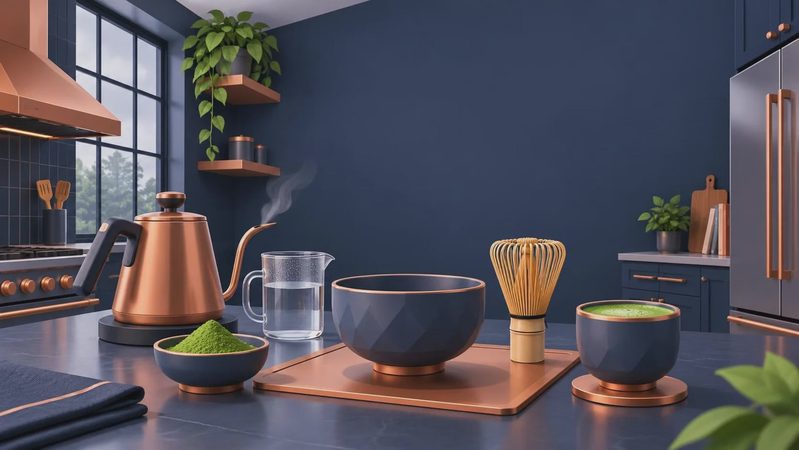
In Japanese tea practice, matcha is prepared by whisking powdered tea with water. Storage is not the most visible part of that ritual, but it supports the qualities people appreciate in the bowl: aroma, color, and flavor. You can borrow that attention to the ingredients without treating one household routine as a universal tradition.
My practical preference is to keep just enough accessible for regular cups and protect the rest from the bustle of the kitchen. Label the container with the date you opened it, close the lid promptly after measuring, and enjoy the tea while it still tastes good to you. Every cup has a history. Not every story is true—and not every good cup requires elaborate equipment.

No comments yet — be the first to share a thought.