The short version is that ceremonial grade vs culinary grade matcha usually comes down to intended use: ceremonial is marketed for drinking with water, while culinary is marketed for recipes where milk, sugar, or other ingredients share the stage. The distinction can be helpful, but it is not a universal grading standard. A good culinary matcha can make a lovely latte, and a tea labeled ceremonial is not automatically worth a higher price.
For a plain bowl, consider Ippodo Tea’s Ummon, a matcha sold for drinking as tea. For a latte, Jade Leaf’s Culinary Grade Matcha is an option intended for mixing and cooking. Maeda-en’s Culinary Matcha is another candidate for baking or blended drinks. These are starting points rather than guarantees: compare the package details and choose a size you can use while the tea is fresh.
Why the labels can be confusing
Matcha is finely ground green tea powder. Unlike steeped tea, where the leaves are removed, the powder is whisked into the drink or mixed into food. In Japanese production, matcha is traditionally made from shaded tea leaves processed into tencha before grinding. Shading and processing influence the finished tea, though they do not make every tin taste alike.
“Ceremonial” and “culinary” are commercial descriptions, not precise, universally enforced categories that tell you exactly how the tea was grown, harvested, or ground. One seller’s ceremonial offering may be another seller’s everyday matcha. Some companies use additional terms such as “premium” or “barista,” which are equally worth investigating rather than taking as a ranking.
In general, matcha sold for plain drinking aims for a pleasant balance of sweetness, savory depth, and bitterness. Tea sold for cooking often has a stronger, more astringent profile that can remain noticeable alongside milk or chocolate. Those are tendencies, not rules, and individual teas vary.
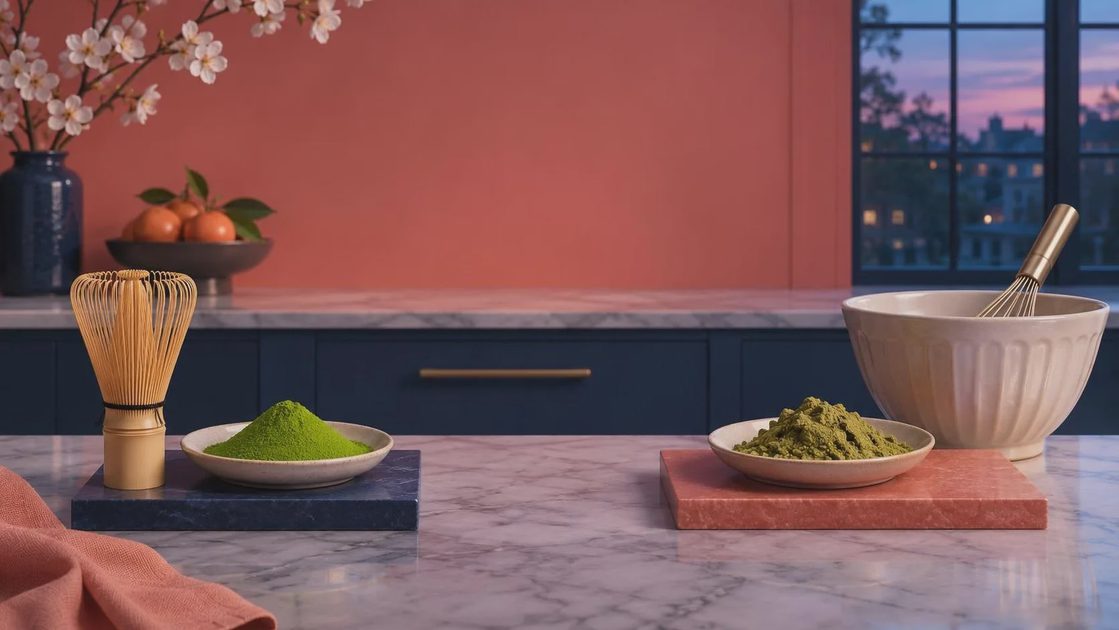
Ceremonial grade vs culinary grade matcha in the cup
For a bowl whisked with water, start with a matcha the seller describes as suitable for drinking plain. A vivid green color and a fresh, grassy aroma can be encouraging, but color alone cannot tell you whether a powder will taste good. Look for a description that gives you something more useful: perhaps a creamy texture, a savory character, or a pleasantly brisk finish.
For a latte, you have more room to experiment. A delicate tea may be lovely with a small amount of milk, but its subtleties can disappear under a large pour or a sweet syrup. A robust cooking-oriented powder can be a better value when you want the tea flavor to come through. If your latte tastes harsh, try less powder or a little more milk before replacing the tin.
For cookies, cakes, and ice cream, use a powder intended for recipes. Heat and competing flavors can obscure the finer qualities of an expensive drinking tea, although matcha used in an unbaked dessert may retain more of its original character. Taste preferences matter: a mildly bitter edge can be welcome against white chocolate or a sweet frosting.
The distinction is not a prohibition. If you enjoy a culinary powder with water, drink it that way. If a favorite drinking tea makes a latte you love, there is no rule against adding milk.
How to read a matcha package
First, look for origin information. Japan is closely associated with matcha production, and a label may name a growing region such as Uji in Kyoto Prefecture or Nishio in Aichi Prefecture. A named region gives useful context, but it does not guarantee a particular flavor or quality. Tea can also be blended from different sources.
Next, read the ingredient list. For plain matcha, it should identify matcha or green tea powder without added sugar or flavorings. Sweetened latte mixes can be convenient, but they are a different purchase: their sweetness and serving proportions are already built in. A powder labeled simply “green tea powder” also merits a closer look, since not every powdered green tea is necessarily produced as matcha.
Finally, check the packing or best-by date if one is available, and consider the size of the container. Matcha’s aroma and color can fade after opening, especially with exposure to air, light, heat, and moisture. A small tin is often a sensible first purchase, even when a larger package has a lower price per ounce.

A simple way to prepare and store it
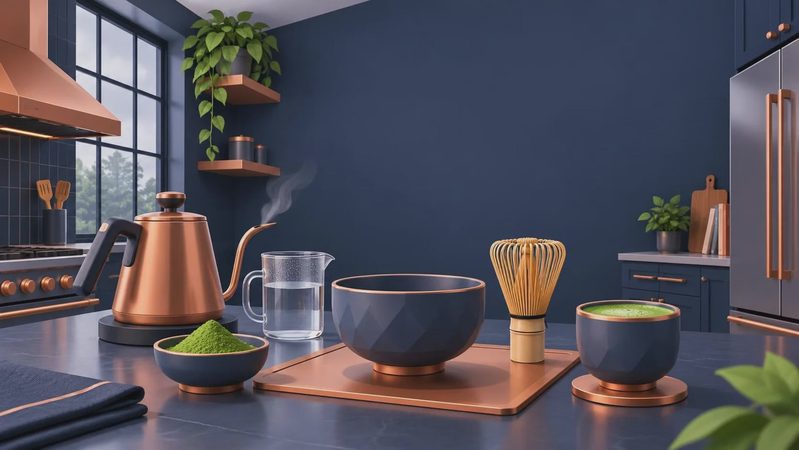
For an introductory bowl, sift about 1 to 2 teaspoons of matcha into a small bowl to break up clumps. Add roughly 2 to 3 ounces of hot water that is below boiling, then whisk briskly until the powder is dispersed and a light foam forms. Adjust the amount of tea and water to your taste. A bamboo whisk, called a chasen, is traditional for this preparation; a small kitchen whisk or handheld frother can also mix a weekday cup.
For an iced latte, make a smooth matcha concentrate first with a little water, then add cold milk and ice. For baking, sift the powder with the dry ingredients so it distributes more evenly. Recipes vary, so start with the stated amount rather than assuming more powder will always make a better dessert.
Store an opened tin tightly closed in a cool, dark, dry place, away from strong odors. Refrigeration can help protect tea from heat, but let a chilled sealed container come to room temperature before opening it; that helps prevent condensation from introducing moisture. Buy quantities you expect to finish reasonably soon rather than treating an open tin as a pantry staple that will stay unchanged indefinitely.
The tradition behind the modern label
Matcha has a long place in Japanese tea practice, including chanoyu, a tradition centered on preparing and sharing powdered tea with attention to the setting, utensils, and guests. Practices differ among schools and occasions. The English word “ceremonial” on a retail tin is not, by itself, evidence that a tea meets a shared ceremonial standard or comes with a particular historical pedigree.
You can appreciate the care behind the bowl without performing expertise. Choose a tea for the way you actually plan to enjoy it, notice what it tastes like, and let the label begin the conversation rather than end it.


No comments yet — be the first to share a thought.