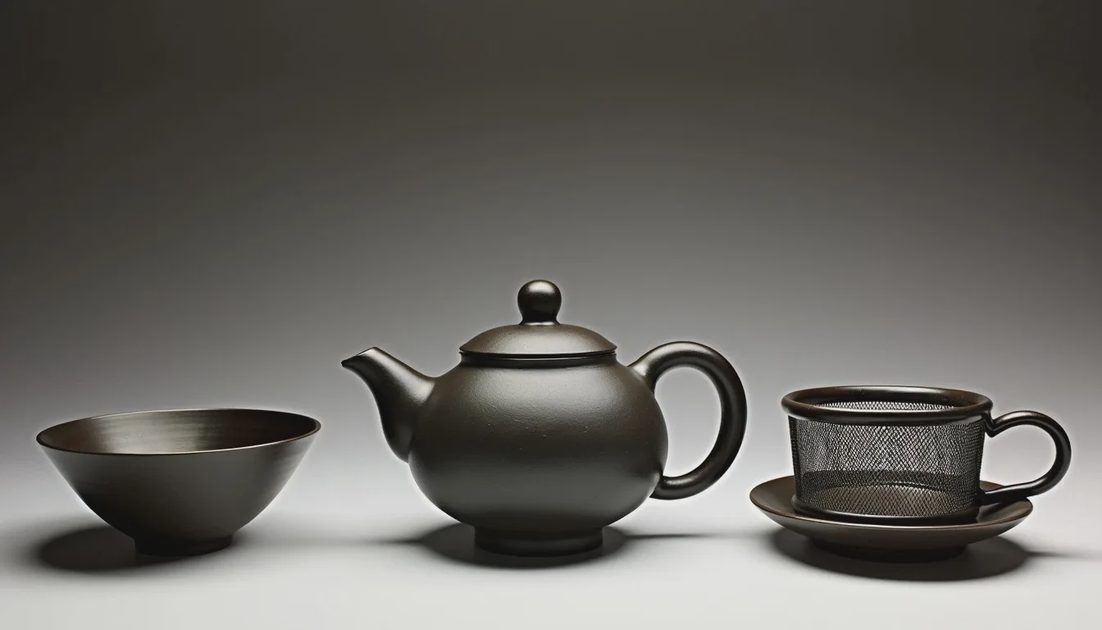
The moment you decide to move beyond tea bags, the equipment aisle (or online catalog) becomes noisy. Gaiwans, Yixing pots, glass pots, ceramic pots, basket infusers, mug infusers, travel sets, and more all claim to be essential. Most beginners do not need most of them.
Three tools cover the great majority of early needs: the gaiwan, the everyday teapot, and the simple infuser basket. Each has strengths and limitations. Choosing among them depends less on tradition and more on how you actually brew and how much attention you want to give the process on a normal day.
The Short Version
Infuser basket: lowest friction, works with mugs you already own, best for straightforward Western-style steeping.
Teapot: good for sharing or larger single servings, familiar form, wide range of prices and materials.
Gaiwan: excellent control and versatility for multiple short infusions, especially with Chinese-style teas, but requires a short learning curve.
Most beginners do well starting with an infuser basket or a simple teapot. A gaiwan becomes valuable once you want more control or begin exploring teas that reward multiple infusions.
The Infuser Basket: Lowest Barrier
A mesh or perforated basket that sits inside a mug or pot is the most forgiving entry point. You add leaf, pour water, steep, and lift the basket out. No special pouring technique is required. Cleanup is usually easy.
Strengths
Works with equipment you already have
Minimal learning curve
Easy to adjust leaf quantity and time
Inexpensive and widely available
Limitations
Less ideal for very fine leaves that slip through larger mesh
Does not encourage the multiple-short-infusion style used for many oolongs and some other teas
Heat retention and pouring elegance are limited by the mug or pot you pair it with
If your main goal is better flavor than tea bags with almost no change in routine, an infuser basket is often the most rational first purchase.
The Everyday Teapot: Familiar and Social
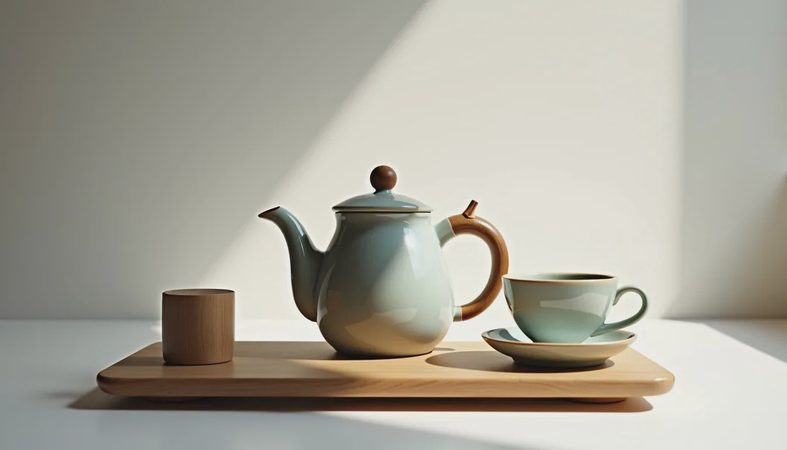
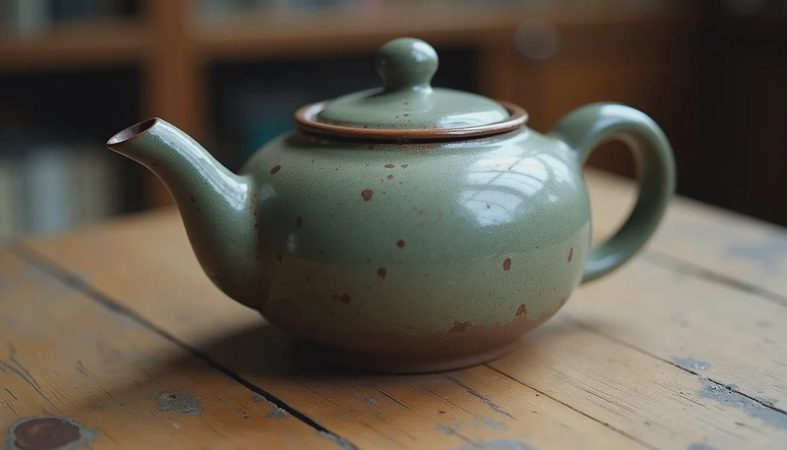
A simple ceramic, glass, or porcelain teapot holds more liquid and feels familiar to most Western households. It is well suited to brewing a larger volume for yourself or for sharing with one or two other people.
Strengths
Comfortable, recognizable form
Good for longer, single infusions
Wide variety of sizes and price points
Easy to find with built-in strainers or used with a separate filter
Limitations
Larger volume can lead to over-extraction if leaf sits too long
Less precise for the rapid multiple infusions favored by many Chinese and Taiwanese brewing styles
Cheap pots with coarse strainers can let fine particles through
A modest teapot is an excellent choice if you regularly make tea for more than one person or prefer a single longer steep. Look for a comfortable handle, a lid that stays put, and a spout that does not drip excessively.
The Gaiwan: Control and Versatility
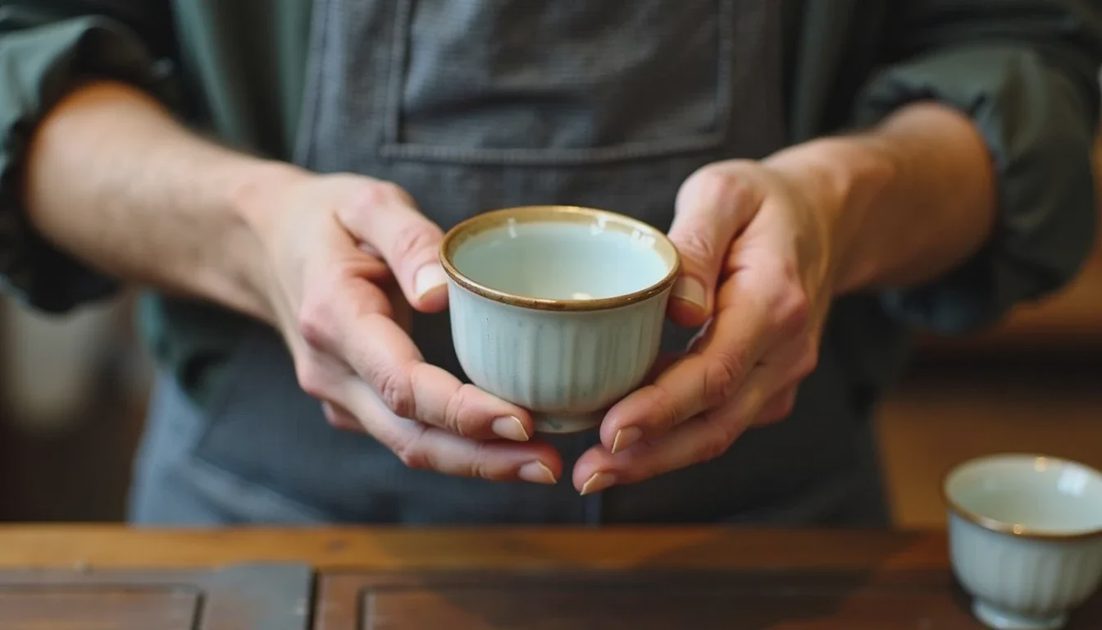
A gaiwan is a lidded bowl, usually porcelain or glass, used for both brewing and sometimes drinking. It is central to many Chinese gongfu-style practices and is especially effective for oolongs, many green teas, white teas, and pu-erh when you want multiple short infusions.
Strengths
Excellent control over short steeping times
Allows you to watch the leaf open and smell the aroma directly
Versatile across many tea types
Relatively inexpensive for a functional porcelain example
Limitations
Requires learning how to hold and pour without burning your fingers
Smaller capacity means more frequent refills if you are drinking larger volumes
Feels unfamiliar to people used only to mugs and teapots
The learning curve is real but short. Most people become comfortable within a few sessions. Once that comfort exists, the gaiwan becomes one of the most informative tools you can own because it keeps you close to the leaf and the changing liquor.
How to Decide
Ask three practical questions:
Do I mostly brew for myself in a mug, or do I want to share from a pot?
Am I interested in multiple short infusions, or do I prefer one longer steep?
How much new technique am I willing to learn right now?
Answers tend to sort as follows:
Mug + minimal technique → infuser basket
Sharing or larger volume + familiar method → teapot
Curiosity about Chinese-style teas + willingness to learn → gaiwan (often in addition to one of the above)
You do not have to choose only one forever. Many people eventually own all three for different situations. The mistake is buying the most specialized or expensive tool first and then finding it sits unused because it does not match daily habits.
Material and Quality Notes for Beginners
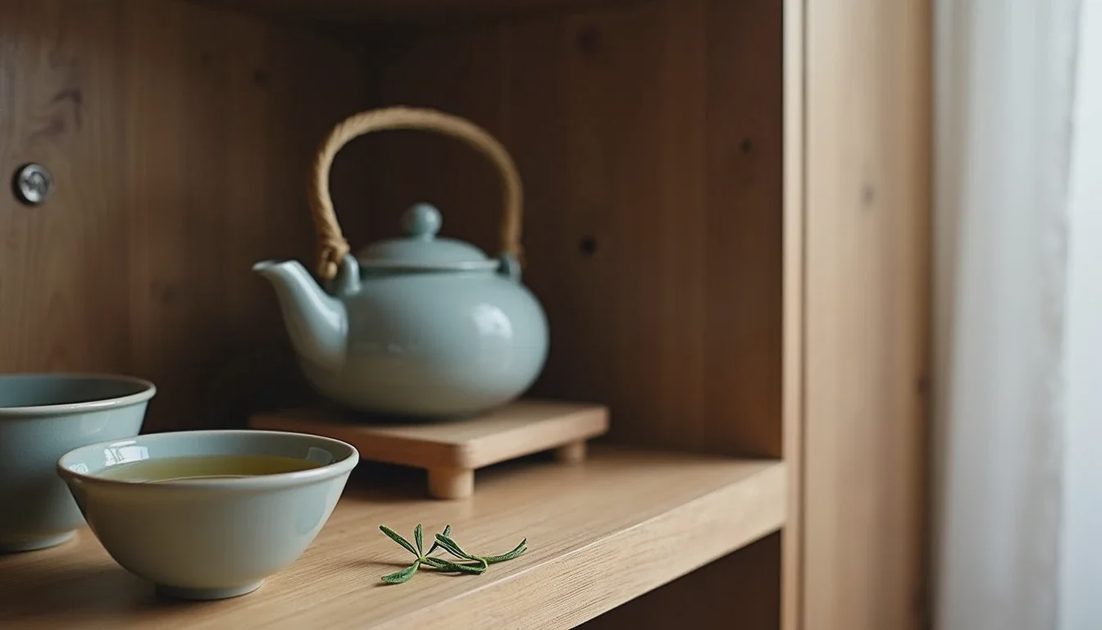
Porcelain and glazed ceramic: neutral, easy to clean, good all-purpose choices.
Glass: lets you watch the leaf, but can cool faster and show stains over time.
Unglazed clay (such as Yixing): beautiful and traditional for certain teas, but better as a later purchase once you know which tea types you drink often, because these pots are usually dedicated to one style.
Fine mesh stainless steel: practical for infusers; avoid very coarse mesh if you drink broken-leaf teas.
Spend enough to get a vessel that pours cleanly and feels secure in your hands. Extremely cheap tools that drip, rattle, or crack easily create friction that discourages use.
Final Thought
The best first tool is the one you will actually use on ordinary days. An infuser basket or a simple teapot serves most beginners extremely well. A gaiwan becomes powerful once curiosity and confidence grow. Start with the lowest-friction option that matches your current routine; let more specialized tools arrive later, when the need is clear.
Every cup has a history. Not every story is true. The story that you need a large collection of vessels before you can drink good tea is one of the less true ones.
No comments yet — be the first to share a thought.