
The short version is that a tea bowl is a handleless vessel used to prepare or drink tea. Its shape and purpose vary by tradition: a Japanese matcha bowl gives a whisk room to move, while other bowls have served as individual drinking vessels. You do not need a formal tea room to enjoy one, but knowing what yours is meant to do makes it much easier to choose and use.
What makes a tea bowl different from a cup?
There is no universal dividing line. Both hold tea, and neither needs a handle. In everyday English, “bowl” often suggests a wider opening and a shape that sits comfortably in both hands. In Japanese tea practice, the word chawan refers to a tea bowl; the same word can also refer to a rice bowl, depending on context.
A matcha bowl is designed around a particular task. Matcha is finely ground tea whisked into water rather than steeped and strained. A broad interior gives the whisk room to work, and enough depth helps contain splashes. The bowl is also the vessel from which the tea is drunk.
A bowl used for drinking steeped leaf tea has different demands. It may be smaller, and it does not need to accommodate a whisk. Some tea drinkers also use a gaiwan, a lidded bowl associated with preparing and drinking tea in China. Depending on the setting, the lid can help hold leaves back while drinking or while pouring tea into another vessel.
These objects overlap, but they are not interchangeable in every situation. A shallow drinking bowl may make whisking messy; a large matcha bowl may feel unwieldy for serving a small infusion of loose-leaf tea.
A brief history, without the tidy origin story
Tea has been prepared in many ways across time and place. In China during the Song dynasty, powdered tea was whisked with hot water, and dark-glazed bowls could show the pale foam to advantage. Surviving ceramics and historical descriptions give us useful evidence, although they do not tell us that everyone drank tea in exactly the same way.
Japanese tea culture developed in conversation with practices and objects from China, then took distinctive forms over centuries. In Japanese chanoyu, often translated as the way of tea, the bowl is both a working utensil and an object that guests may appreciate for its form, surface, and history. Different schools and settings have their own conventions.
You may hear that an irregular bowl is valuable simply because it is imperfect. That is a tempting shortcut, but it flattens a richer history. In some Japanese tea contexts, qualities associated with wabi, including restraint and an appreciation of humble materials, became important. Those qualities are not a formula: a rough surface alone does not establish a bowl’s age, origin, or cultural significance.
Every cup has a history. Not every story is true. When a seller offers a sweeping tale about a particular object, ask what is actually known about its maker, date, and use.
How to choose a tea bowl for everyday use
Start with the tea you intend to drink. For matcha, look for an interior wide enough to whisk without repeatedly striking the sides. The bottom should give you space to move the whisk, while the walls should be high enough to keep liquid contained. A stable foot matters more than an especially dramatic silhouette.
For steeped tea, think about serving size and heat. A small bowl can be pleasant for repeated infusions, but a thin-walled vessel filled with very hot tea may be uncomfortable to hold. Let the tea cool a little, or choose a bowl with a shape and thickness that feel manageable in your hands.
Ceramic is a common choice, but clay bodies and glazes differ. If you are buying a newly made piece, look for a maker or retailer who identifies it as suitable for food and drink. Ask about care instructions and whether the finish is intended for regular contact with liquids. An old, unidentified, or decorative bowl is best admired rather than used until its suitability is established.
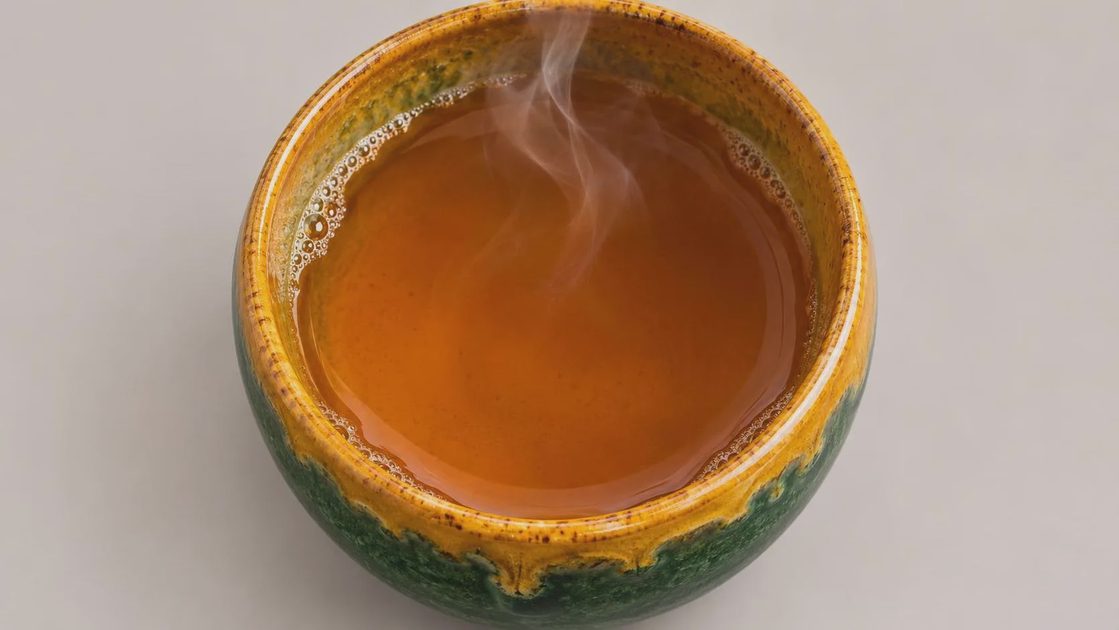
The rim deserves attention, too. It should feel comfortable against your lips and show no sharp chips. Handmade pieces often vary slightly in shape; that variation is not necessarily a flaw. Look instead for a bowl that sits securely and feels balanced when filled.
Price alone will not tell you whether a bowl fits your routine. A simple, food-safe piece can serve a beginner beautifully. A work by an individual ceramic artist may cost more because of the making, materials, and artistic work involved, not because it automatically produces better tea.
Make matcha in a tea bowl
Warm the bowl with a little hot water, then discard it and dry the interior. Sift about one teaspoon of matcha into the bowl to reduce clumps. Add roughly two ounces of hot water that is below boiling, then whisk briskly with a bamboo whisk until the powder is dispersed and a light foam forms.
Those amounts are a starting point, not a rule for every tea or every school. Add more water for a lighter drink, or adjust the matcha to taste. The powder stays suspended rather than dissolving, so drink reasonably soon and give it another gentle whisk if it settles.
No bamboo whisk? A small handheld frother or a tightly closed jar can disperse the powder for an everyday drink. Neither reproduces every aspect of a formal preparation, and neither needs to. You can appreciate the ritual without performing expertise.
Cleaning and handling
Wash the bowl promptly according to its maker’s instructions. For a handmade or delicate piece, gentle handwashing and thorough drying are sensible starting points. Avoid sudden temperature changes, such as pouring boiling water into a bowl that has just come from a cold place, because thermal shock can damage ceramics.
If a bowl develops a crack that leaks or a chip along the drinking edge, retire it from tea service. Decorative repair may be possible, but not every adhesive or repair method is suitable for food contact. A sound bowl, a tea you enjoy, and a few quiet minutes are enough to begin.


No comments yet — be the first to share a thought.