
The short version of sage tea benefits is pleasantly grounded: this caffeine-free herbal infusion offers a savory, aromatic cup and a long history of traditional use. Made from the leaves of common sage, or Salvia officinalis, it tastes more like a garden herb than a conventional breakfast tea. People drink it for its flavor, warmth, and possible digestive, oral, and antioxidant support, but it is not a cure-all or a substitute for medical care.
Sage is not a true tea in the botanical sense. True teas come from Camellia sinensis, while sage is an herb steeped in hot water. That distinction matters because a plain sage infusion contains no natural caffeine and has a different chemistry, cultural history, and brewing personality. Every cup has a history. Not every story is true.
What sage tea is and how it tastes
Common garden sage has gray-green, slightly fuzzy leaves and a strong aroma that recalls pine, earth, rosemary, and warm stuffing. As a drink, it can be savory, mildly bitter, and a little drying on the tongue. A small amount of honey softens the edges, while lemon adds brightness. If you already enjoy thyme, rosemary, or mint infusions, sage will feel familiar but more substantial.
Historically, sage has appeared in household herbal practices around the Mediterranean and Europe, where the plant was grown for cooking and domestic remedies. The historical record is less tidy than the popular story. Old herbals often praised plants broadly, while modern research examines specific extracts, doses, and compounds. A kitchen infusion should not be treated as equivalent to a concentrated capsule or essential oil.
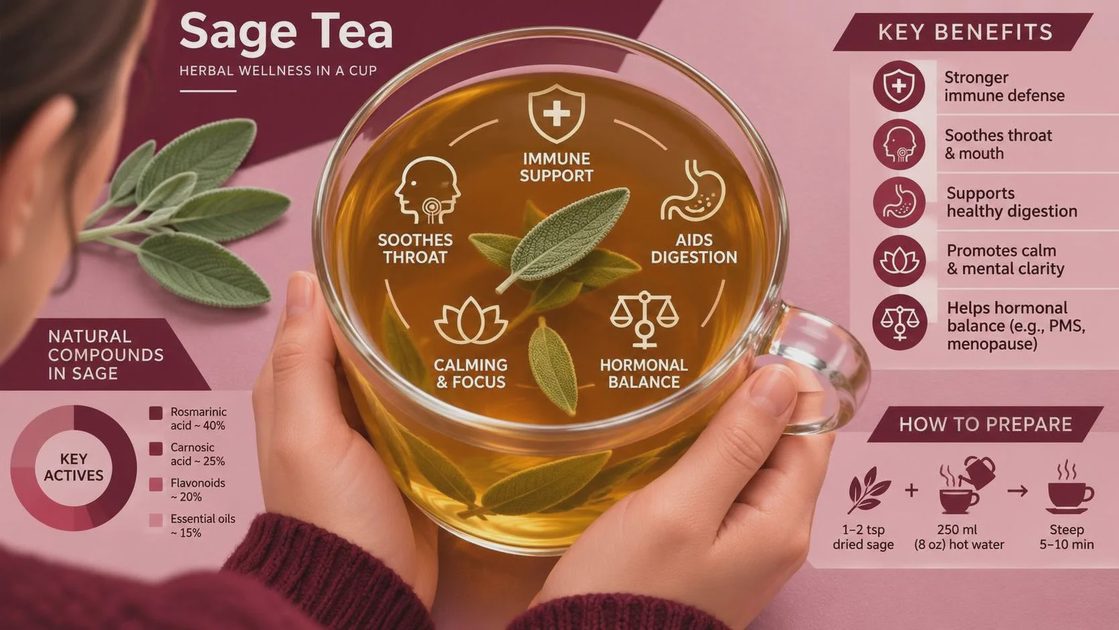
For a first cup, use one teaspoon of dried sage leaves or two teaspoons of fresh leaves in eight ounces of just-boiled water. Cover the mug and steep for five to seven minutes, then strain. Covering the cup helps retain volatile aromas. Start with a shorter steep because a long infusion can become sharply bitter.
Sage tea benefits supported by tradition and early research
Several commonly discussed sage tea benefits relate to the plant’s aromatic compounds and antioxidant activity. Laboratory research has found that sage contains compounds such as rosmarinic acid and other polyphenols. These findings help explain why sage appears in traditional wellness practices, but laboratory activity does not automatically prove that drinking a cup produces the same result in people.
One practical use is as a warm, soothing drink for the mouth and throat. Some people sip cooled sage tea or use it as a gentle gargle, a practice found in various household traditions. It can feel refreshing, especially when the infusion is not overly strong. Anyone with persistent throat pain, fever, swelling, or trouble swallowing should seek medical advice rather than relying on tea.
Digestive comfort is another traditional reason people choose sage. After a rich meal, a small cup can provide a warming ritual and may feel easier to drink than a sweet dessert beverage. Evidence for specific digestive effects from ordinary sage tea remains limited, so the sensible claim is comfort and tradition, not guaranteed treatment.
How to brew a better cup at home
The best sage tea benefits are easier to appreciate when the cup tastes balanced. Use culinary sage that is clean, correctly identified, and intended for food or beverage use. Garden centers sell many varieties, but not every ornamental plant is labeled for culinary consumption. Dried leaves are convenient and usually stronger by volume; fresh leaves offer a greener, more resinous aroma.
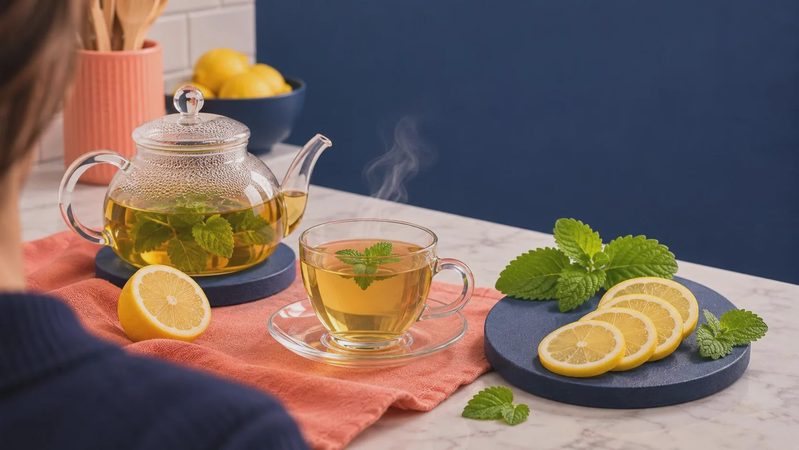
Bring water to a boil, then let it sit briefly before pouring. A covered ceramic mug works well, though a small glass teapot lets you watch the leaves open and settle. Strain after five minutes and taste before adding more steeping time. For a gentler blend, combine sage with lemon balm, peppermint, chamomile, or a slice of fresh ginger. These combinations make the savory herb friendlier for beginners without pretending to represent one historical tradition.
A simple afternoon blend uses one-half teaspoon sage, one-half teaspoon chamomile, and eight ounces of hot water. For a meal, try sage with lemon peel rather than sugar. If you prefer a more familiar tea structure, add a small amount of black tea, remembering that the blend will then contain caffeine and no longer be a plain herbal infusion.
Safety questions to consider before drinking sage tea
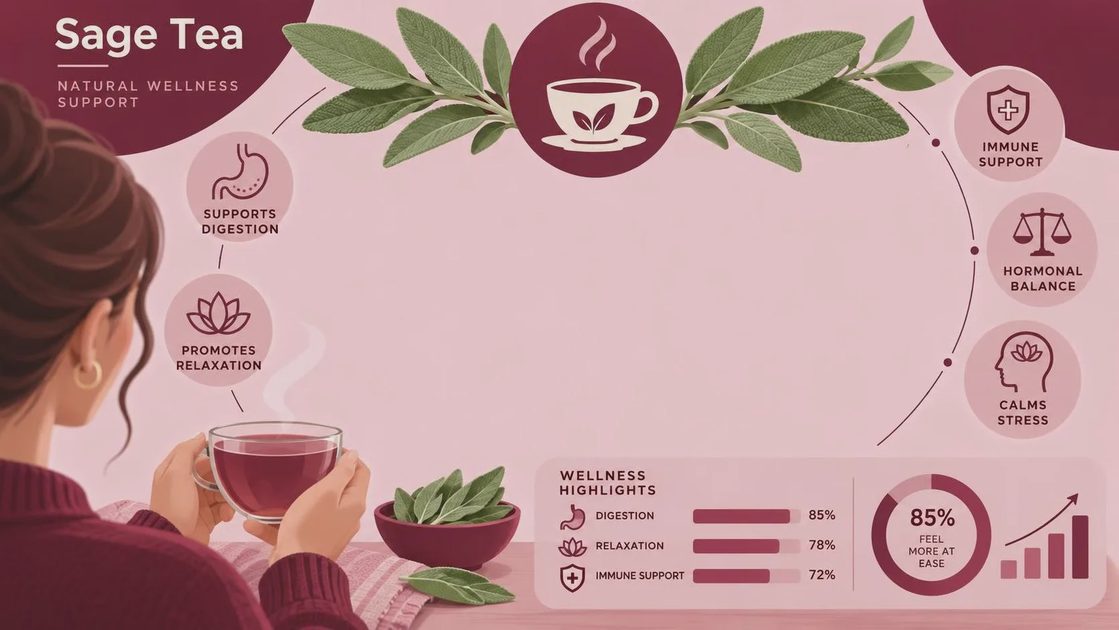
Safety belongs in any honest discussion of sage tea benefits. Culinary amounts used occasionally are generally different from concentrated sage oil or high-dose supplements. Sage contains thujone, a compound that can be harmful in excessive amounts. Do not drink essential oil, and avoid making unusually strong infusions or consuming large quantities for long periods.
People who are pregnant or breastfeeding, have a seizure disorder, or take medication for diabetes should ask a qualified clinician before using sage regularly or in concentrated forms. Sage could also interact with some medicines, and an allergy is possible. Stop if you develop rash, breathing difficulty, dizziness, or unusual symptoms. If you take prescription medication, a pharmacist can often provide a quick, practical interaction check.
This caution does not make an occasional cup frightening. It simply puts the herb in proportion. A lightly brewed mug enjoyed with breakfast is a food-like experience; a daily regimen of several strong cups or an extract is a different question. Product labels matter, especially when a blend includes other herbs.
Choosing leaves and building a tea ritual
Look for dried sage in a sealed spice or herbal-tea package with an ingredient list, lot information, and a reasonable freshness date. Bulk herbs can be excellent, but they should come from a shop that protects them from heat, light, and moisture. Store leaves in an airtight container away from the stove. If the aroma has faded to dusty paper, the cup will probably taste flat as well.
A small ritual can make this herbal drink more satisfying than a rushed wellness task. Warm the mug, measure the leaves, watch the steam collect under the lid, and take a minute to notice the changing scent. This is one tradition, not the only tradition. You can appreciate the ritual without performing expertise, and a teabag user is no less welcome at the tea table than someone with a shelf of handmade pots.
For a workday, brew a mild cup in a travel mug and pair it with savory toast or a simple lunch. In the evening, choose sage alone if you want its woodsy flavor, or blend it with caffeine-free herbs for a softer profile. The point is not to force a dramatic health promise onto a plant; it is to make a thoughtful, enjoyable choice.
A realistic way to think about sage tea benefits
Sage tea benefits are best understood as a combination of flavor, ritual, traditional use, and plausible but still limited evidence. The infusion may provide antioxidant compounds, a warming sensation, and a useful caffeine-free alternative to coffee or black tea. It may also help you slow down after a meal or add variety to a winter beverage routine.
Those are worthwhile benefits without exaggeration. Sage tea will not detox the body, replace antibiotics, reverse a chronic condition, or guarantee sharper memory. Claims about dramatic results usually move beyond what an ordinary cup can support. If you enjoy the flavor and have no reason to avoid it, brew a modest serving and pay attention to how your body responds.
My preferred approach is simple: buy culinary-quality leaves, steep lightly, and let taste guide the recipe. Add lemon when the cup feels heavy, honey when it is too dry, and chamomile when you want a rounder evening blend. With sensible portions and realistic expectations, sage can earn a place in the everyday tea cabinet—one fragrant cup at a time.



No comments yet — be the first to share a thought.