
The short version is that irish breakfast tea is usually a robust blend of black teas, often with Assam from northeastern India contributing a malty, full-bodied character. Brew it with freshly boiled water for about three to five minutes, then add milk if you like. It is designed to be satisfying at the breakfast table, but there is no rule against drinking it in the afternoon or enjoying it plain.
What gives the blend its character?
Irish breakfast tea is a blend, not a tea grown in Ireland or a recipe with one fixed list of ingredients. Assam is a common component, prized for its deep color and substantial flavor. Depending on the blender, teas from other growing regions may also be included. The result can taste malty, brisk, or slightly earthy, with enough body to stand up to milk.
Black tea gets its color and much of its flavor through processing that includes oxidation, a reaction that changes the leaf after it is picked and worked. Breakfast blends often use small leaf pieces as well as, or instead of, larger leaves. Smaller pieces tend to infuse quickly, which helps explain the strong cup associated with a breakfast teabag.
That strength is not the same as bitterness. A well-balanced cup can be rich without tasting harsh. If yours leaves a drying sensation in your mouth, try a shorter infusion or a little less tea before assuming the blend is not for you.
A package labeled irish breakfast tea tells you the intended style, but not exactly how it will taste. One blend may emphasize malty Assam; another may be brighter or more astringent. Ingredients, leaf size, and brewing instructions are more useful clues than the word breakfast alone.

How to brew a satisfying cup
Start with fresh, good-tasting water. Bring it to a boil, then pour it over one teabag or about one teaspoon of loose tea for an eight-ounce cup. Steep for three minutes and taste. If you want more depth, let it go another minute or two, then remove the bag or strain the leaves.
These are starting points, not a test of tea-making virtue. Loose teas vary in leaf size and density, so a teaspoon is convenient rather than exact. Follow the package instructions when they differ, especially for a particularly fine-cut blend. A roomy infuser gives loose leaves space to circulate and makes cleanup simple.
For a stronger cup that will take plenty of milk, add a little more tea rather than extending the steep indefinitely. A long infusion can pull out more astringency along with flavor. If the tea tastes too intense, shorten the steep first; if it still feels heavy, use less leaf or add a splash of hot water.
Milk softens the edges of irish breakfast tea and makes its malty notes feel rounder. Pour it into the cup before or after the tea, whichever suits your routine; neither order is a requirement. Sugar, honey, or no sweetener at all are equally reasonable choices. Taste before adding anything, and you will have a better sense of what your particular blend needs.
A teapot works beautifully for a shared breakfast. Measure tea according to the amount of water, allow room for the leaves, and pour the brewed liquor into cups or a second pot once it reaches the strength you want. Leaving leaves in the pot throughout a leisurely meal means the final cup may be considerably stronger than the first.
Irish and English breakfast: Is there a difference?
Irish breakfast tea is often described as stronger and more Assam-forward than English breakfast tea. That comparison can be helpful at the shelf, but it is a general tendency, not a regulated distinction. English breakfast blends also vary, and an individual Irish-style blend may be gentler than an English-style tea from another company.
Think of the names as signals from the blender rather than guarantees. If you like a dark cup with milk, look for Assam in the ingredients or tasting notes that mention malt and body. If you prefer a lighter cup without milk, try a shorter steep or look for a blend described as bright and balanced. Packaging descriptions are subjective, but they give you a place to start.
The history behind the breakfast cup
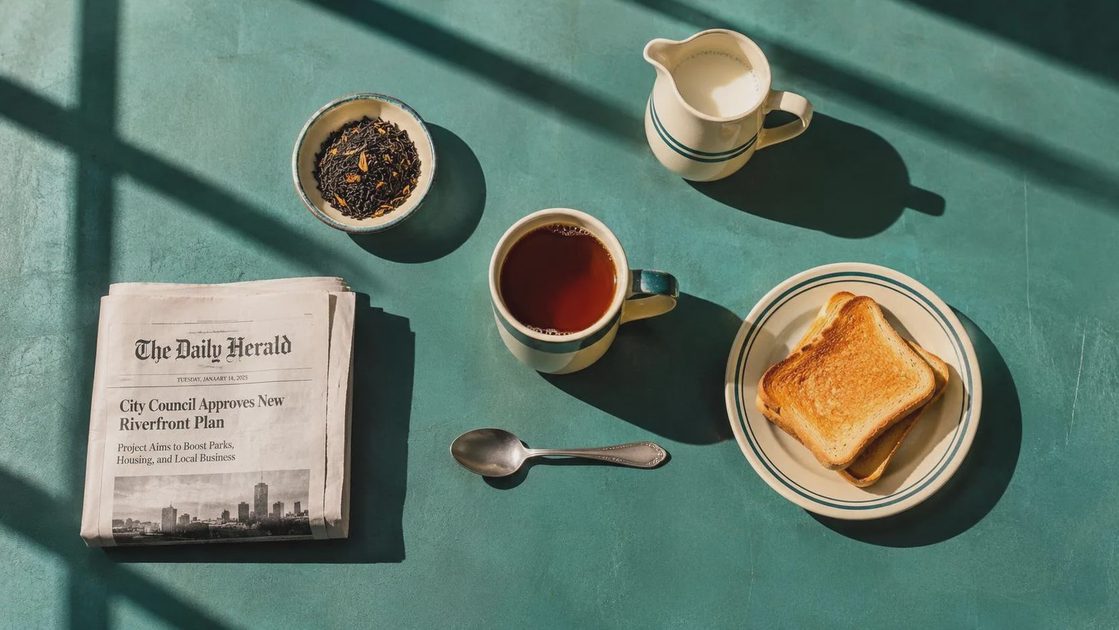
Tea reached Ireland through the same expanding trade networks that brought it to other parts of Britain and Ireland. Over time, it became woven into everyday life, from household meals to the familiar offer of a cup to a visitor. The habit belongs to social history as much as to the history of a particular leaf: a kettle and a pot could make a pause in the day feel like an invitation.
The historical record is less tidy than a single origin story for the blend. There is no one universally accepted formula that explains every tea sold under the name today. Blending practices changed as trade, supply, and consumer tastes changed, and different companies developed their own versions. A modern package is best understood as part of that evolving commercial and domestic tradition, not as a fixed recipe handed down unchanged.
Milk is a familiar companion to strong tea in Ireland, but households have their own preferences. Some people prefer a substantial brew; others take it lighter. This is one tradition with many variations, and there is no need to perform expertise to enjoy it.
Choosing and storing your tea
For convenience, teabags make an easy daily cup; loose leaf gives you more control over the amount and lets you see the size of the leaf. Neither format automatically guarantees better tea. Choose a quantity you expect to finish while its aroma is fresh, and check the label if you want to know the growing regions or whether the blend contains added flavoring.
Irish breakfast tea contains caffeine because it is made from the tea plant. The amount in a cup varies with the blend, serving size, and infusion; a dark color alone will not tell you how much caffeine you are getting. If you are avoiding caffeine, look specifically for a decaffeinated blend rather than assuming a shorter steep removes it.
Store the tea in a well-sealed container away from heat, light, moisture, and strong kitchen odors. A cupboard is a better home than a shelf directly above the stove. When you are ready for a cup, pair it with toast, oatmeal, or a savory breakfast—or simply pour it alongside a quiet moment and a good book.



No comments yet — be the first to share a thought.