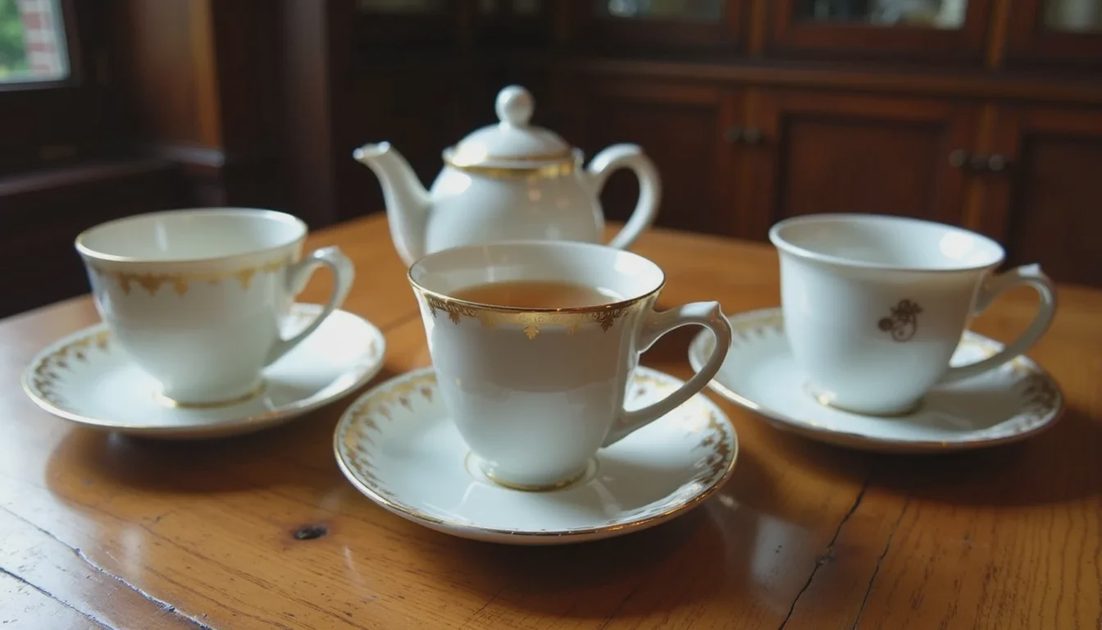
A handle-less Chinese tasting cup, a wide Japanese tea bowl, a British porcelain cup with a handle, and a tall glass for certain modern infusions do not look alike. The differences are not random aesthetic choices. They developed in response to the type of tea being drunk, the temperature of the liquor, the social setting, and the sensory priorities of the culture that shaped them.
Understanding those reasons helps you read cups more intelligently and choose vessels that support the teas you actually drink, rather than collecting shapes that fight the liquor.
The Short Version
Cup shape affects heat retention, aroma concentration, cooling speed, sip size, and how the tea meets the palate. Handle-less cups and bowls are common where tea is drunk hot and in smaller volumes; handled cups became practical where larger volumes and hotter black teas were served. Wide bowls emphasize aroma and visual appreciation; narrower cups can concentrate fragrance and maintain temperature longer. No single shape is universal.
Heat, Volume, and the Presence or Absence of a Handle
In many Chinese and Japanese tea practices, tea is prepared in relatively small volumes and served hot. Cups without handles encourage smaller servings and careful handling. The drinker is expected to hold the cup in a way that is sensitive to temperature—if it is too hot to hold comfortably, it may be too hot to drink immediately.
In British and related European traditions, tea was often served in larger volumes at high temperature, sometimes with milk. A handle protects the hand and allows a bigger cup to be held securely. The shape reflects a different relationship to volume and heat.
Neither approach is superior. Each solves a practical problem created by the style of tea and service around it.
Aroma and the Width of the Cup
Wide, open bowls (as in some Japanese matcha bowls or certain Chinese serving cups) allow aroma to rise freely and give the drinker a full visual view of the liquor and foam. They suit practices where the look and the fragrance of the tea are central to the experience.
Narrower cups or those with a slight inward curve can concentrate aroma toward the nose as you drink. This design appears in various tasting cups and in some formal settings where fragrance is carefully evaluated.
If you primarily drink aromatic oolongs or fragrant green teas, a cup that helps deliver aroma can increase enjoyment. If you mainly drink robust black tea with milk, aroma concentration may matter less than heat retention and comfortable volume.
Material and Mouthfeel
Porcelain, stoneware, glass, and unglazed clay each interact differently with heat and with the tactile sense of the lip. Thin porcelain cools faster and gives a clean edge. Thicker stoneware retains heat longer and can feel more substantial. Glass shows color clearly but may cool quickly and can become hot to the touch. Unglazed clay can subtly influence flavor over time and is often dedicated to particular tea types.
Material choice is therefore both practical and sensory. Beginners usually do well with glazed porcelain or ceramic that is neutral, easy to clean, and comfortable against the mouth.
Social and Historical Context
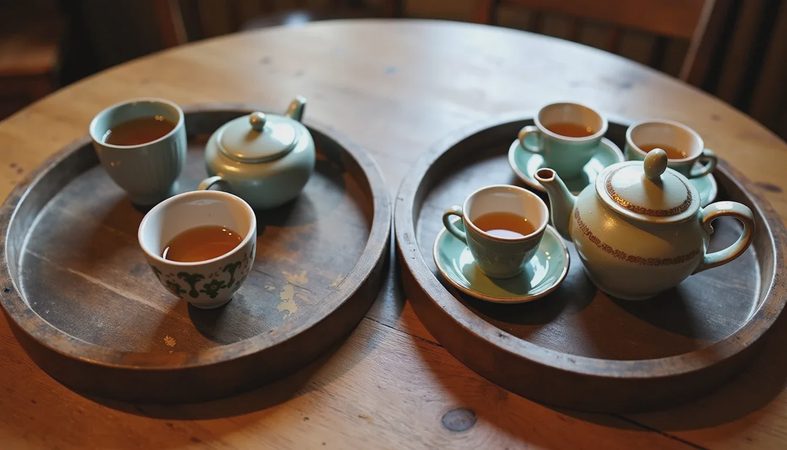
Cup shapes also carry social information. Formal British tea cups with saucers signal a particular kind of table service. Japanese matcha bowls are sized and shaped for the whisking process and the two-hand handling of the ceremony. Chinese tasting cups used in gongfu service are intentionally small so that multiple infusions can be appreciated in sequence without large volumes of cooling tea.
When these cups move into new cultural settings, their original logic can be lost. A large handled mug used for delicate green tea, or a tiny handle-less cup used for a long Western-style breakfast brew, can feel awkward because the vessel and the preparation style are mismatched.
Practical Guidance for Choosing Cups Today
Ask three questions:
What kind of tea do I drink most often?
Do I prefer smaller, hotter servings or larger, more leisurely volumes?
Do I care more about aroma concentration, heat retention, or visual clarity?
Rough matches:
Delicate greens and aromatic oolongs → smaller cups that help with aroma, often handle-less or with a light handle
Robust black teas, especially with milk → medium to larger handled cups that retain heat
Multiple short infusions → small tasting cups that encourage frequent refills
Visual appreciation of color → glass or pale porcelain
You do not need one perfect universal cup. Most people eventually keep two or three shapes that cover their main tea habits.
Final Thought
Cup shapes evolved to solve real problems of heat, aroma, volume, and social setting. Once you see those problems clearly, the variety of forms stops looking arbitrary and starts looking logical. You can then choose vessels that support the teas you actually drink instead of fighting them.
Every cup has a history. Not every story is true. The practical story of why a cup is shaped the way it is remains one of the more reliable guides you can use when building your own table.
No comments yet — be the first to share a thought.