
The short version is that matcha can be expensive because the tea used to make it requires specialized growing and processing before it ever reaches your cup. If you have wondered why is matcha so expensive compared with a box of green tea bags, the answer includes shading, careful leaf selection, slow milling, and the cost of protecting a delicate powder from air and light. Price also reflects demand, packaging, and the seller’s markup. None of that means the most expensive tin is automatically the best one for you.
Why growing and processing cost more
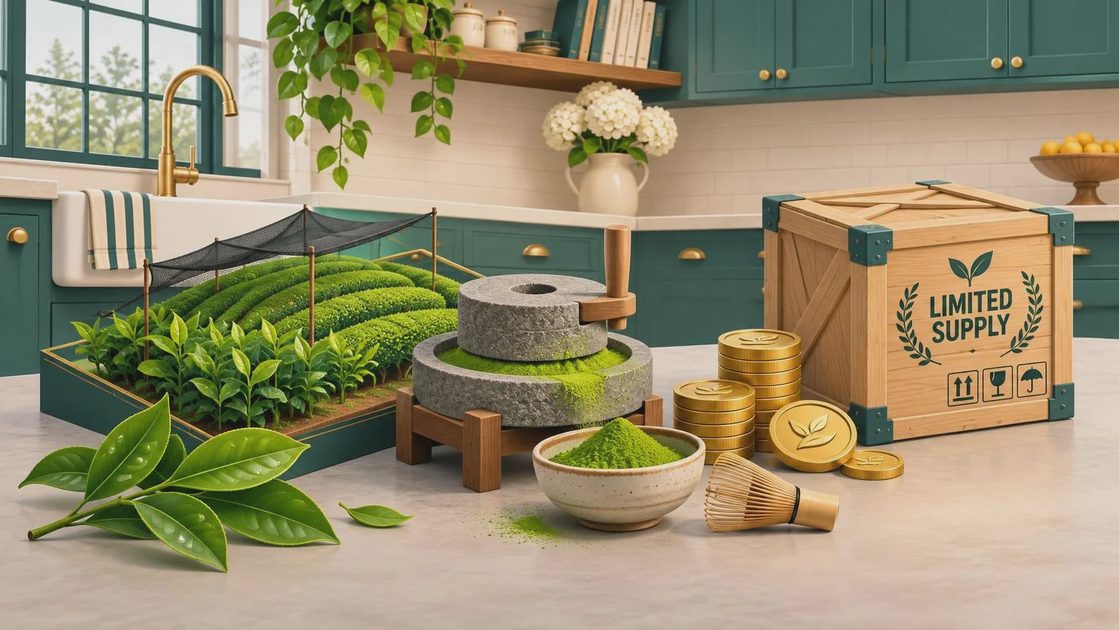
Matcha is a finely ground green tea traditionally made from tencha: leaves that are shaded before harvest, then steamed, dried, and processed to remove stems and veins before grinding. Shading changes how the leaves develop and contributes to the flavor associated with matcha. Managing that shade takes materials and labor, although methods vary from farm to farm.
Leaf selection matters, too. Tender leaves are generally prized for matcha intended to be whisked with water, while other leaves and harvests may be used for teas suited to cooking or milk drinks. A farm cannot simply turn every part of the plant into the same finished powder; sorting and refining add work, and some plant material is removed along the way.
Traditional stone mills grind tencha slowly into a fine powder. Other milling equipment is also used, and the method can affect cost. A stone mill is not a magic guarantee of delicious tea, but milling is an important step: powder that feels coarse on the tongue can make a bowl less pleasant, even when the flavor is appealing.
By contrast, many ordinary green teas are dried as whole or broken leaves and brewed as an infusion. You discard the leaves after steeping; with matcha, you whisk the powder into water and drink it. They are different products, so comparing the price of a tin directly with the price of a box of tea bags does not tell the whole story.
Why is matcha so expensive when demand rises?
Supply can take time to respond when more people want matcha. Tea plants need established growing time, and producers cannot instantly create more shaded fields, trained labor, or milling capacity. Harvest conditions also vary. Those pressures can push up costs, though the effect differs among producers and sellers.
A tin sold in the United States may travel through several hands after processing. Importing, shipping, storage, packaging, and retail operations all contribute to the shelf price. A small, light-protective container can also cost more per ounce than a large food-service package. Some of what you pay is for handling; some may be for branding or a shop’s particular selection.
That distinction is useful because a high price alone cannot tell you how a tea was grown or whether you will enjoy it. Nor does a lower price prove that a tea is bad. A matcha blended for a sweetened latte has a different job from one served on its own.
What labels can and cannot tell you
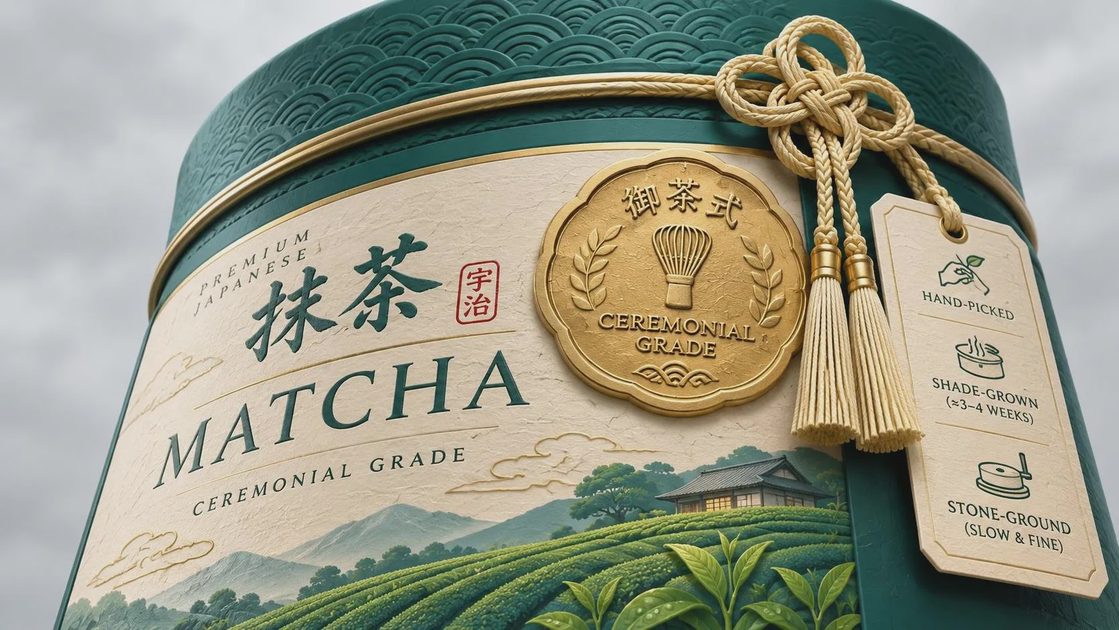
In the United States, “ceremonial grade” and “culinary grade” are marketing descriptions, not regulated, universally standardized grades. Sellers often use the first for matcha intended to be whisked with water and the second for powder meant for recipes or milk drinks. Those labels can point you toward a use, but they do not establish a shared quality scale.
Look instead for a clear product description. A seller should be able to tell you where the tea was produced, what is in the package, and how they suggest preparing it. Japanese matcha may be identified by a prefecture or growing area; that information offers useful context, though a famous place name is not a guarantee of quality. For a plain bowl, check that the ingredient list contains tea rather than sugar or flavorings.
Color can offer a clue, but it is not a complete test. A vivid green powder is often sought after, while dull or brownish powder may have suffered from age or storage. Lighting, photographs, and processing also affect appearance, so I would not buy on a picture alone.
Compare the cost of a cup, not just the tin
To make a useful comparison, divide the weight of the package by the amount you use per serving. A 30-gram tin prepared at 2 grams per bowl gives approximately 15 servings. Divide the tin price by 15 for the tea cost per bowl. Your actual yield will vary with your scoop and preferred strength.
That arithmetic also helps when comparing a larger bag with a small tin. The bag may be cheaper per gram, but only a bargain if you can use it while you still enjoy its flavor. If you drink matcha occasionally, a smaller package may be the more satisfying purchase even when its unit price is higher.
For a first purchase, choose according to how you actually drink tea. If you want a simple bowl with water, look for a small package described as suitable for drinking straight. If milk, ice, or baking ingredients will share the cup, a less expensive matcha intended for those uses may be just right. You do not need to spend for the subtlest tea and then worry about whether you are allowed to add milk.
Make the tea you buy last
Matcha is sensitive to air, light, heat, and moisture. Keep it tightly sealed in its original light-protective container or another airtight, opaque container, away from heat and strong odors. Follow the producer’s storage instructions, especially before opening; some recommend refrigeration. If a chilled container is unopened, let it come to room temperature before opening so condensation is less likely to reach the powder.
Once opened, use it promptly rather than saving it indefinitely for an imagined special occasion. The flavor and color can fade over time, though the pace depends on the tea and how it is stored. A smaller tin makes that easier to manage.
Japanese tea gatherings helped give powdered tea a lasting cultural role, but your everyday bowl does not need to imitate a formal gathering. A small whisk or milk frother, a bowl, and warm water are enough to begin. Every cup has a history. Not every story is true, and not every good cup needs to be the most expensive one on the shelf.




No comments yet — be the first to share a thought.