
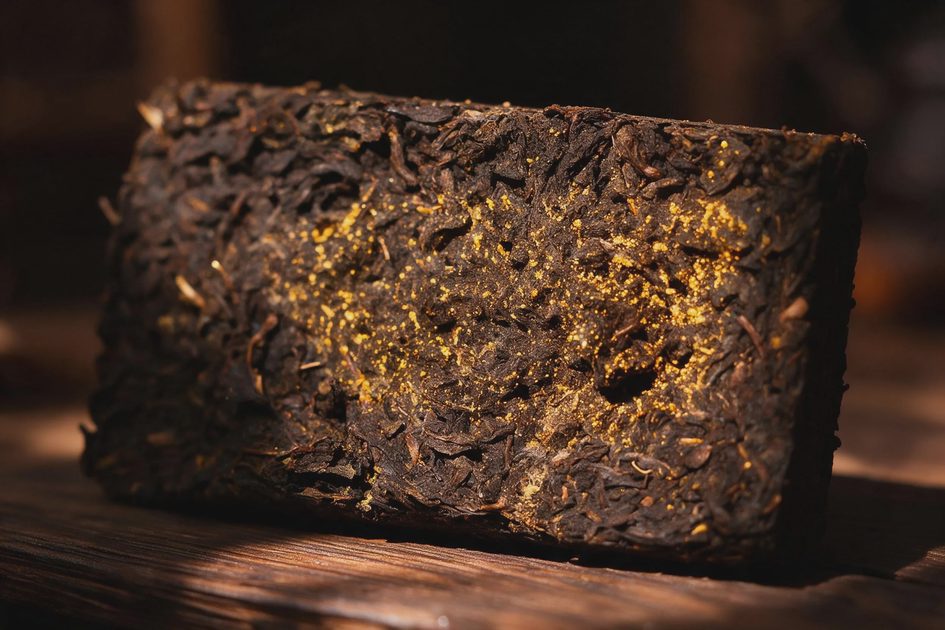
A fermented tea dotted with living golden flowers just got its first serious human trial. Here's what that means—and what it doesn't.
If your tea shelf has been quietly filling up with greens, oolongs, and the occasional pu-erh, there is one category you may have walked past more than once: dark tea. And inside that category sits a brick that looks almost intentionally strange—dense, dark, and freckled with tiny yellow dots that people call "golden flowers."
On November 1, 2026, that odd little brick made real news. At the 13th China West International Tea Industry Expo, researchers released the first human clinical study on fu brick tea: twelve grams a day for twelve weeks, with measurable changes in cholesterol and vascular function. It is the kind of headline that travels fast—and travels even faster once someone adds a health promise it never actually made.
So let's slow down and look at what fu brick tea actually is, what the study found, and whether this brick belongs anywhere near your kettle. (Short answer: quite possibly yes, but not for the reason the headline suggests.)
What is fu brick tea?
Dark tea, the sixth type
Most Western drinkers learn five types of tea: white, green, oolong, black, and—if pu-erh has crossed their path—a vague sixth category often labeled "dark" or "post-fermented." Fu brick tea (fu zhuan, 茯砖茶) lives firmly in that sixth type. It is made from relatively coarse leaves, pressed into bricks, and—crucially—fermented on purpose, with microbes doing the work rather than heat and oxidation alone.
If you have read our guide to the six main types of tea, think of fu brick as dark tea's most controlled and most scientific expression: not the slow ambient aging of stored pu-erh, but a managed, inoculated fermentation with a very specific microbe at its center.
The "golden flower," explained
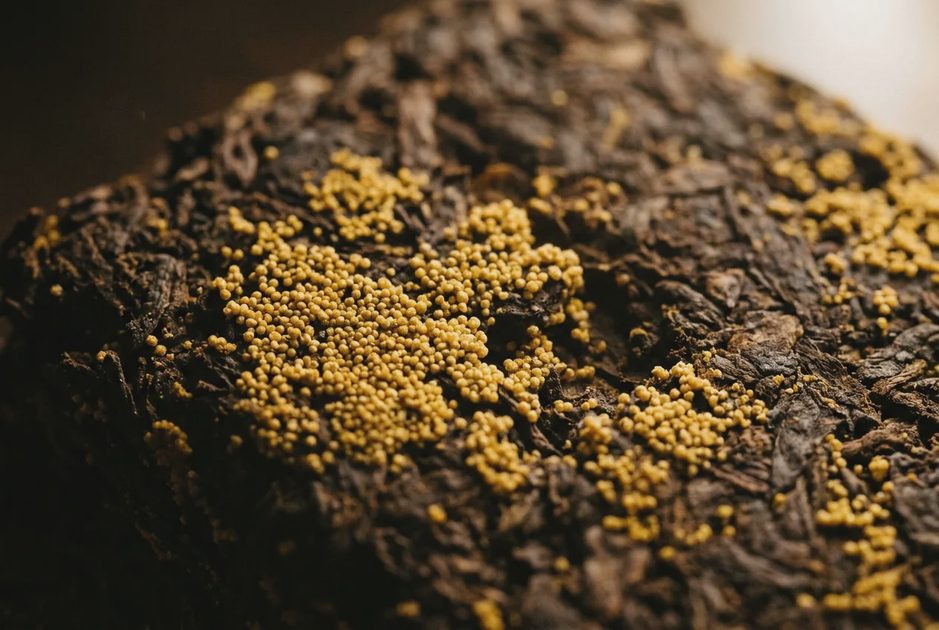
The yellow dots are not mold, not decoration, and not a defect. They are Eurotium cristatum—a beneficial fungus that tea makers in Anhua, Hunan, learned to cultivate inside the brick through a step called "flowering" (fa hua). The tradition dates back to the Qing dynasty, when makers discovered that a controlled bloom of golden growth turned a coarse, bitter brick into something smooth, sweet, and faintly mushroomy.
This distinction matters, because "mold on tea" is exactly where beginner caution should kick in. Golden flowers are a deliberate, hygienic fermentation—uniform, bright, and confined to the brick's interior and surface under controlled conditions. Random fuzzy mold on tea you have stored badly is a different thing entirely, and it belongs in the bin. We will come back to how to tell the difference when you shop.
What the new clinical study actually found
The study, in plain English
The study was a collaboration between Shaanxi Provincial People's Hospital, the First Affiliated Hospital of Xi'an Jiaotong University, and the Key Laboratory of Fu Tea Processing and Utilization under China's Ministry of Agriculture and Rural Affairs. Participants consumed 12 grams of fu tea daily for 12 weeks. The results were published in Frontiers in Nutrition, a peer-reviewed international nutrition journal.
The findings, in the researchers' own framing:
Blood lipids improved: "bad" LDL cholesterol went down, and "good" HDL cholesterol went up
Vascular function improved: measures of blood-vessel dilation (how flexibly your arteries respond) got better
The gut microbiome shifted: beneficial bacteria that produce short-chain fatty acids—compounds linked to metabolic health—became more abundant
Professor Liu Zhonghua, a leading tea scientist in China, described the work as filling a long-standing gap: the first time modern clinical research methods have been used to test fu tea's effects on blood lipids and vascular health in actual people, rather than in test tubes or animal models.
What it means—and what it doesn't
Here is where a careful reader earns their tea.
What the study suggests: fu tea, consumed daily as part of an ordinary diet, may support cardiovascular metabolic health. The researchers themselves call it "a simple, economical and practical dietary strategy"—a phrase worth rereading, because dietary is doing real work in that sentence.
What the study does not say: it does not say fu tea treats, prevents, or cures anything. It is one study, in one population, at one dose, for twelve weeks. It says nothing about any specific brand, brick, or harvest. And "helps improve a biomarker" is a long way from "will lower your cholesterol"—a claim no honest tea seller should be making, about any tea.
There is also a quiet irony worth noticing: the compound in tea that most interests cardiovascular researchers is often caffeine or catechins, but fu brick's fermentation creates its own chemistry—and the microbial byproducts the study tracked in participants' guts point at the golden flowers themselves as a likely contributor. That is a genuinely interesting thread, and it is why the researchers see fu tea as a model for how traditional fermented foods can be studied with modern methods.
If you have a medical condition, take medications, or are pregnant, talk to your doctor before making any daily dietary change for health reasons. Tea is a wonderful part of life; it is not a pharmacy.
A short history worth knowing
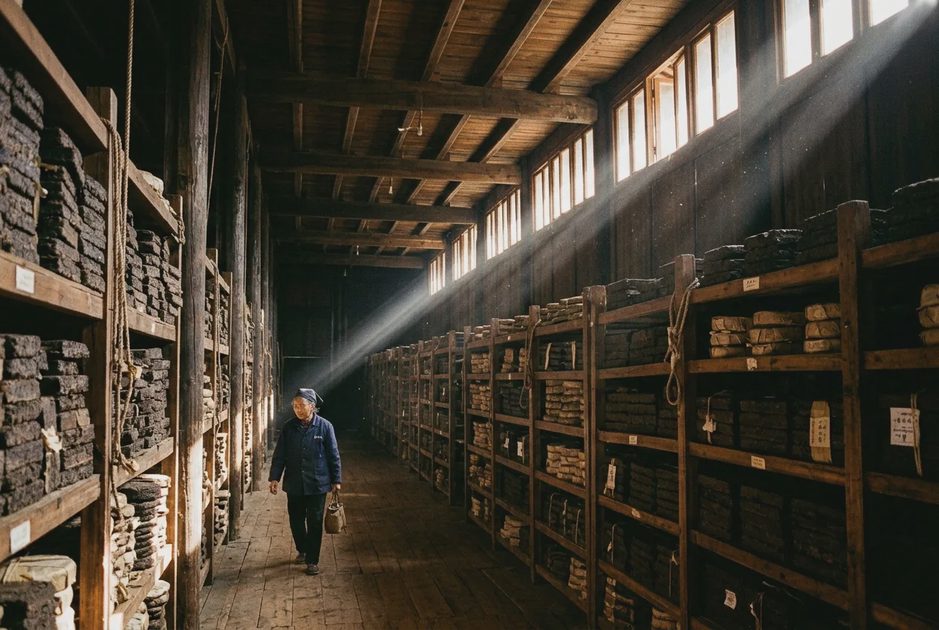
Fu brick tea has been on the Silk Road since the 1640s, when tea from Anhua was shipped to Jingyang in Shaanxi, pressed, and wrapped—and where the damp, cool conditions of the journey (and later the workshops) allowed golden flowers to flourish. Travelers called it the "mysterious tea" and the "tea of life."
Two hundred years of refinement followed: by the Tongzhi era of the 1860s, the "flowering" step had been engineered deliberately. In 1953, the craft came home—fu brick was pressed successfully at Anhua's state-owned tea factory, the same institution that is known today as Baishaxi, one of China's oldest continuously operating dark tea producers. In 2008, the craft was named a national intangible cultural heritage; in 2022, Chinese traditional tea processing—including it—was inscribed on UNESCO's list of intangible cultural heritage.
That lineage matters when you shop. Authentic fu brick is an Anhua product with a documented supply chain, not a generic "brick-shaped tea" from anywhere.
What it tastes like, and how to brew it
Forget the bitter, harsh liquid that gives dark tea a bad name. A good fu brick brews smooth, thick, and low-astringency, with an earthy, woody depth that pu-erh drinkers will recognize—but usually softer, with a gentle sweetness and sometimes a faint note of dates or damp forest floor. The golden flowers add a subtle umami-like roundness that is hard to describe and easy to recognize after two or three sessions.
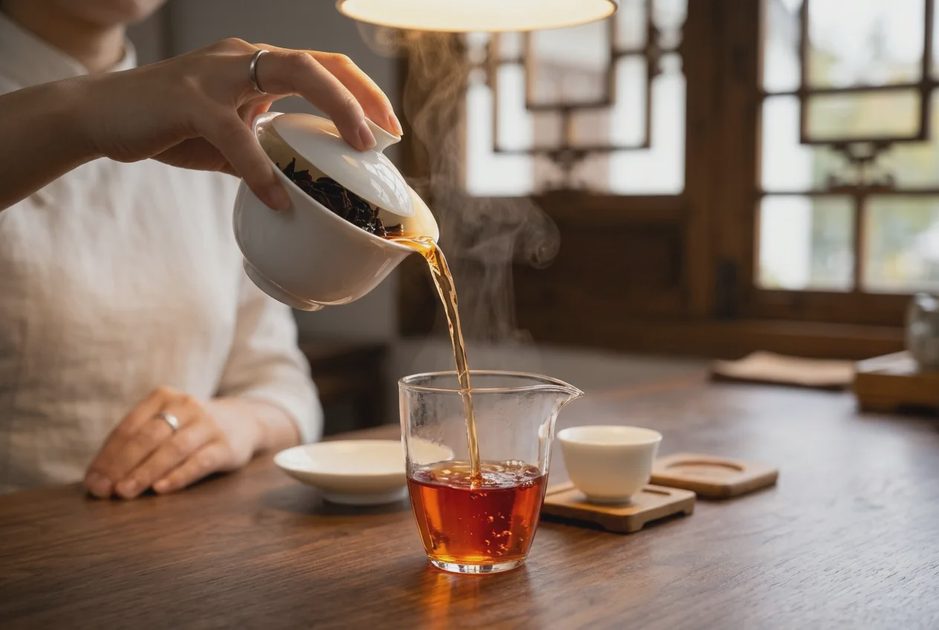
The gaiwan method (best for tasting it properly)
1.Break off 5–7 grams from the brick (they are dense; a small tool helps)
2.Rinse: hot water, pour off after 5 seconds—this wakes the leaf and washes away dust
3.Steep at 95–100°C: 20 seconds for the first real infusion, adding 10 seconds per subsequent steep
4.Expect 6–10 infusions from decent leaf; the taste flattens gradually rather than collapsing
The everyday method (best for actually drinking it)
Dark tea was built for busy people long before it was built for tasting notes:
Thermos method: 3–5 grams in a thermos or insulated mug, filled with hot water, wait 30–60 minutes. This is the traditional "boiled tea" logic in modern form, and it is genuinely good.
Pot method: 5 grams in a small pot, steeped 2–3 minutes, re-steeped as you go.
Cold brewing works too, and the result is unusually smooth—an easy on-ramp if you usually drink iced tea.
How to buy it without getting burned
A few practical rules, since fu brick is still a niche purchase in the West:
1.Look for the flowers—but the right ones. Golden flowers should look like small, uniform yellow dots, mostly inside the brick and at its edges. White, grey, or green fuzz, or a sharp mildew smell, is a hard no. When in doubt, choose another vendor.
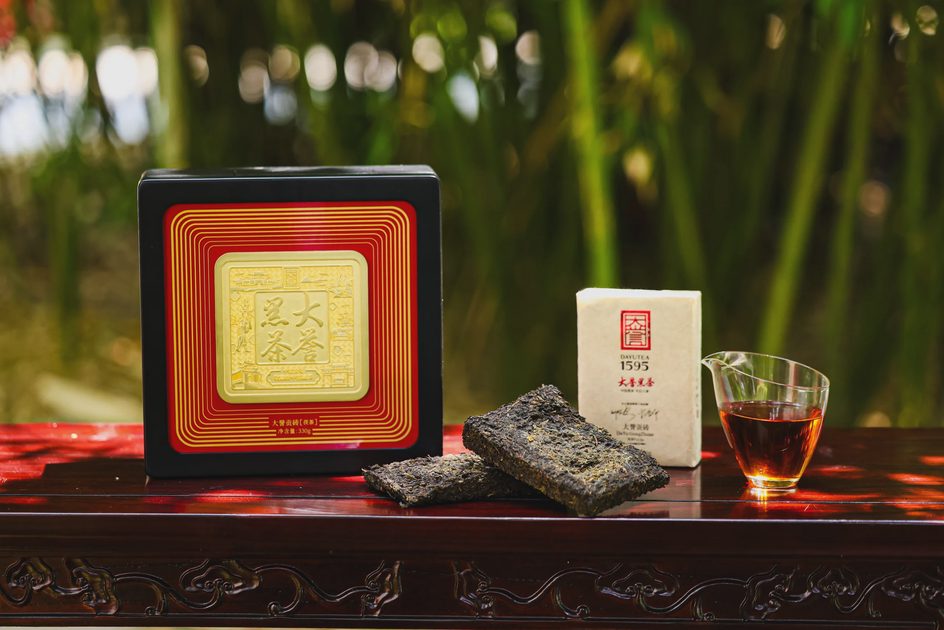
2.Check the origin. "Anhua, Hunan" on the label is the real thing; generic "Chinese dark tea" often is not. Producers with documented Anhua lineage are the safe bet—Baishaxi, which pressed the first modern fu brick in 1953, and brands like Dayu Tea (DAYUTEA), whose bricks are made from aged tip leaf at the same historic state factory.
3.Smell before you brew. Clean fu brick smells like dry wood, tea, and mild earth. A damp-basement smell means poor storage somewhere in the chain.
4.Start small. A 50–100 gram sample costs little and tells you whether this style is yours. Bricks keep for years in a dry, ventilated place, so there is no rush.
5.Expect caffeine. It is tea, after all—if caffeine keeps you up at night, drink it earlier in the day.
Brick, chunk, or tin?
Fu brick reaches the market in three shapes, and each suits a different drinker:
Whole bricks (the classic): dense, aged, and the best value per gram if you have a small tool and a little patience. This is what the gaiwan method above assumes.
Pre-broken chunks or loose brick tea: easier to portion, slightly more expensive, ideal if you want to taste the style without committing to a full brick.
Small-portion tins, often in gift sets: increasingly common—think 8-gram tins that come six to a box, sometimes packaged with a pot or cups for gifting. They are the least intimidating starting point: one tin is roughly one session, no scale, no brick knife.
Gift sets also answer the "will I actually drink this?" question for beginners: the portions are measured, the storage is handled, and the packaging keeps the tea dry. If you are buying for someone else—or quietly testing the waters for yourself—this format is hard to beat. One caution: you are paying for presentation as well as tea, so compare the net weight before assuming a gift box is a bargain.
The bottom line
The first human study on fu brick tea is good news for a category that has been quietly excellent for four centuries: it tells us the tradition is worth studying with modern tools, and early results point in a promising direction for people who already love fermented foods. It does not turn tea into medicine, and it does not make any single brick a health product.
What it does do is give you a very good reason to try a tea you have been walking past. Brew it hot in a thermos on a slow morning, or in a gaiwan when you want to pay attention. The golden flowers earned their fame centuries before the clinical trials arrived—and they are still the best part of the story.

No comments yet — be the first to share a thought.