
The short version of how to make matcha at home is simple: sift a small amount of powdered green tea into a bowl, add hot water below boiling, and whisk until the surface looks lightly frothy. You do not need a ceremonial room, expensive equipment, or a perfect wrist technique. You need fresh matcha, sensible water, and a few quiet minutes to learn what the tea is telling you.
Matcha is made from shade-grown tea leaves that are steamed, dried, and ground into a fine powder. Because you drink the suspended leaf rather than infusing and discarding it, the preparation rewards attention to freshness and texture. The tradition most American readers associate with matcha developed in Japan, particularly through forms of tea practice connected with chanoyu. Home preparation, however, can be much less formal.
What you need before you begin
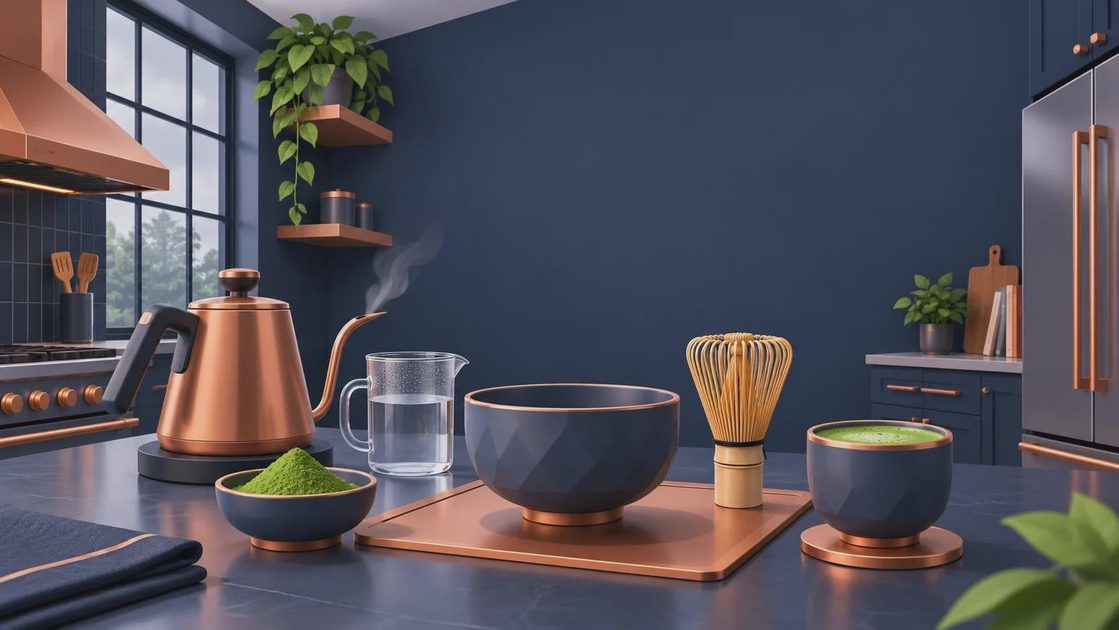
For how to make matcha at home, start with four useful items: matcha powder, a small bowl, a bamboo whisk called a chasen, and a teaspoon or bamboo scoop. A fine kitchen sieve is especially valuable because matcha clumps easily. If you do not own a chasen, a handheld electric frother can produce foam, although it changes the hand motion and feel of the preparation. A small whisk designed for sauces is another workable substitute.
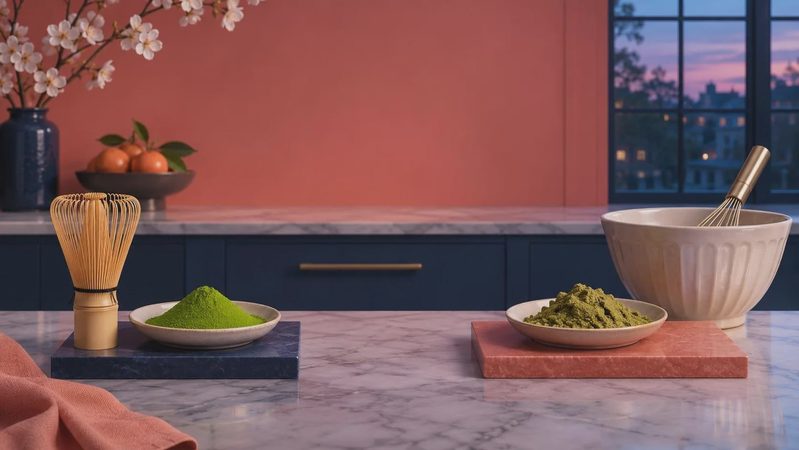
Choose matcha sold in an opaque, well-sealed package. Bright green color is a useful visual clue, but it is not proof of quality by itself. Look for a harvest or packing date when available, and buy a modest quantity until you know how quickly you will use it. A 20-gram tin can be more practical than a large bag that sits open for months. Store the powder tightly sealed, away from heat, light, moisture, and strong pantry smells. Refrigeration can help after opening, but let the container warm before opening it so condensation does not reach the powder.
A traditional tea bowl, or chawan, has a broad interior that gives the whisk room to move. A cereal bowl with gently sloped sides works perfectly well for a first attempt. The object matters less than having enough space to whisk without splashing.
How to make matcha at home step by step
To practice how to make matcha at home, begin by warming the bowl. Pour in a little hot water, swirl it around, and discard it. Dry the bowl thoroughly. This small step prevents the first sip from being cooled by cold ceramic and makes the preparation feel deliberate rather than fussy.
Measure about 1 to 2 grams of matcha, usually one level teaspoon or two bamboo scoops. Sift it into the bowl. Add roughly 2 ounces of water heated to about 160 to 175 degrees Fahrenheit. Water straight from a rolling boil can make the tea taste sharply bitter, so let a kettle rest for several minutes or use a temperature-controlled kettle.
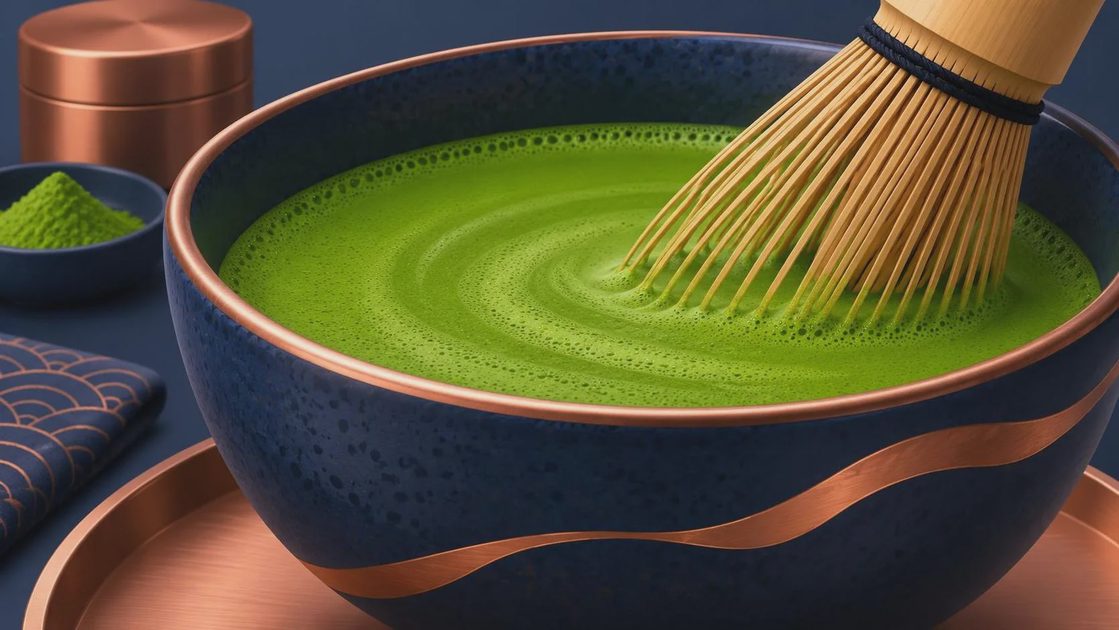
Hold the bowl steady with one hand and grip the chasen lightly with the other. First stir slowly to combine the powder and water, pressing out any dry pockets. Then whisk briskly in a back-and-forth motion that resembles the letter W or M. Keep the whisk near the bottom of the bowl rather than grinding it against the ceramic. After 15 to 30 seconds, look for a thin layer of small bubbles. A thick cap of foam is not required; smooth suspension is the real goal.
Lift the whisk, let the drops fall back into the bowl, and drink the matcha soon after preparation. The powder will settle if it sits, which is normal. You can rotate the bowl before drinking, but there is no need to imitate formal gestures unless you are studying a particular tea-school practice.
Fixing bitterness, clumps, and weak flavor
Many first attempts at how to make matcha at home go wrong because the water is too hot or the powder is old. If the cup tastes harsh and drying, try cooler water, less powder, or a shorter whisking time. If it tastes thin, increase the matcha slightly or reduce the water. A useful beginner ratio is 1 gram of powder to 1 ounce of water, adjusted to your preference.
Clumps usually come from skipping the sieve, adding water too quickly, or storing the powder in humid conditions. Sifting solves most of the problem. You can also make a smooth paste with a teaspoon of water before adding the remaining amount, but avoid turning the mixture into a thick lump that the whisk cannot reach.
If the drink is grassy, nutty, sweet, or faintly marine, those flavors reflect the tea and its processing, not a mistake. Matcha can vary widely. Some inexpensive cooking grades are deliberately robust for baking and milk drinks, while drinking grades are usually milder and more balanced on their own. Neither label is a complete guarantee, so taste and freshness remain important.
The history behind the bowl
The powdered-tea practice associated with Japanese matcha has a long history, but the historical record is less tidy than the popular story. Powdered tea was used in earlier Chinese tea cultures, and tea knowledge moved across regions through religious, scholarly, and commercial connections. Japan developed its own institutions, utensils, aesthetics, and schools rather than simply preserving an unchanged earlier custom.
That context gives the home ritual more meaning without turning it into a test of cultural performance. A whisk, bowl, and quiet pause can acknowledge a living tradition while remaining part of an American kitchen routine. This is one tradition, not the only way to drink green tea. You can appreciate the history without claiming expertise after one bowl.
Drinking matcha plain or with milk
Plain matcha lets you notice texture and aroma most clearly. For a softer morning drink, prepare a concentrated 1- to 2-ounce serving and pour it over ice with cold water. For a latte, sift 1 to 2 grams into a bowl, whisk it with 1 to 2 ounces of warm water, and add 6 to 8 ounces of steamed milk. Dairy, oat, and soy milk each create a different result; oat milk contributes sweetness, while dairy can give the drink a fuller body.
Sweetener is optional. If you use it, add a small amount after whisking so you can taste the tea first. Maple syrup, honey, and simple syrup dissolve more easily than granulated sugar in a cool drink. Matcha contains caffeine, so treat it as a caffeinated beverage rather than a health remedy. Claims that it detoxes the body or guarantees weight loss go beyond what a simple cup can establish.
A calm five-minute routine
Once you understand how to make matcha at home, preparation can become a practical daily pause. Keep the powder, sieve, bowl, and whisk together on a tray. Boil only the water you need, warm the bowl, and rinse the whisk immediately after use. Avoid soaking a bamboo whisk for long periods or leaving it bristles-down, since trapped moisture can encourage cracking or mold.
The most useful measure of success is not a flawless foam pattern. It is a cup that tastes good to you and a method you can repeat. Start with plain matcha, take notes on water temperature and powder quantity, and change one variable at a time. Every cup has a history. Not every story is true, but a careful home routine can still connect an ordinary morning with centuries of tea-making knowledge.



No comments yet — be the first to share a thought.