
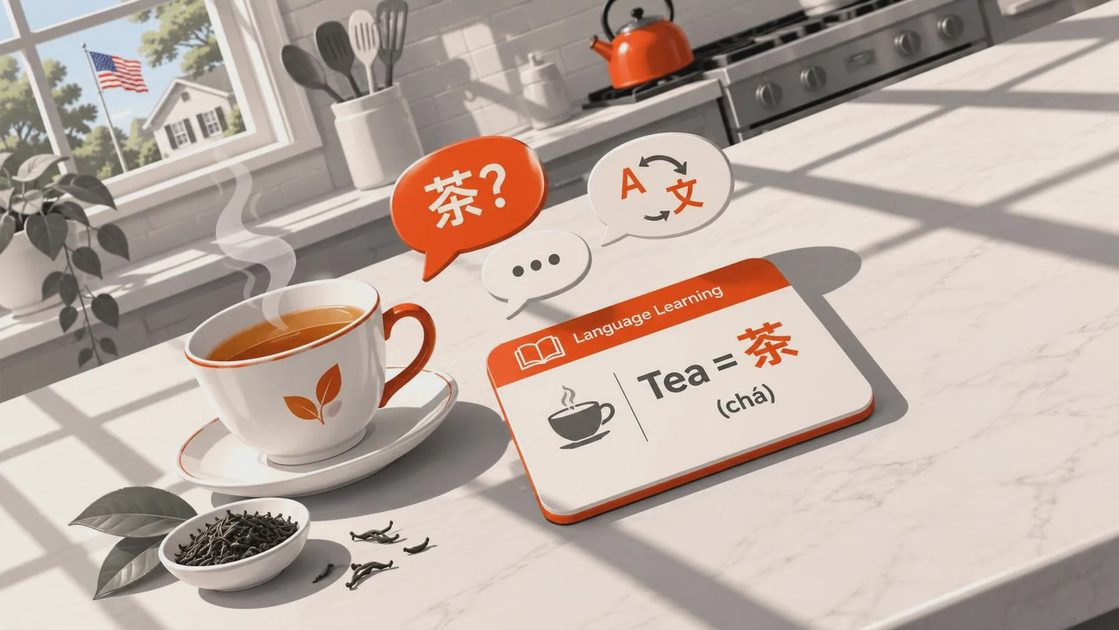
The short version is that tea in Spanish is té, pronounced roughly like “teh.” The written accent matters: té means the drink, while te without the accent is a different word. If you’re ordering, “Un té, por favor” means “A tea, please.” Add the type you want, such as té verde for green tea or té negro for black tea.
How to pronounce and write tea in Spanish
Té is one syllable. Say it with a clear, short “eh” sound, a little like the vowel in the English word “ten,” but without the final n. Avoid stretching it into the English “tay.” Spanish pronunciation varies by region, of course, but a straightforward “teh” will be understood.
The accent mark over the e helps distinguish té, the noun for tea, from te, a pronoun used in sentences. For instance, “Te gusta el té” means “You like tea.” The two words sound alike; the accent tells you which is which on the page.
The plural is tés, with the accent still in place. You might see “dos tés” when someone orders two cups or refers to two teas. If you’re typing without a Spanish keyboard, remember that a missing accent can change the written word, even if the surrounding sentence makes your meaning clear.
Ordering tea in Spanish: useful phrases
A little vocabulary goes a long way at a café or restaurant. These are complete, polite requests you can adapt:
“Un té, por favor.” A tea, please.
“Un té verde, por favor.” A green tea, please.
“Un té negro, por favor.” A black tea, please.
“¿Tiene té sin cafeína?” Do you have decaffeinated tea?
“¿Puede traerme leche aparte?” Could you bring me milk on the side?
You can also ask “¿Qué tipos de té tiene?” for “What kinds of tea do you have?” In a less formal setting, you may hear or use “tienes” instead of “tiene.” Either way, a friendly greeting and “por favor” are more useful than worrying about perfect grammar.
A note for travelers: decaffeinated tea is not necessarily completely caffeine-free. If you need to avoid caffeine, ask about the specific drink rather than assuming that every item called an infusion is suitable.
Tea in Spanish and the names on a menu
The basic color names are useful whether you’re reading a box in a U.S. grocery store or a menu abroad. Té verde is green tea, té negro is black tea, té blanco is white tea, and té rojo literally means red tea. Té con leche means tea with milk; té con limón means tea with lemon. Té helado generally refers to iced tea.
That last color term deserves attention. In Spanish, té rojo can refer to pu-erh, a fermented tea associated with Yunnan, China. But tea color categories do not map neatly across languages: what English speakers call black tea is commonly called red tea in Chinese classification. The words on a package are a starting point, not a guarantee of the leaf inside. Look for the tea’s name and origin, or ask the server.
You may also encounter té de jazmín, or jasmine tea, and té de menta, or mint tea. Those names describe flavor, but they do not always tell you the base. Jasmine tea often combines tea leaves with jasmine scent; a mint drink might contain tea leaves, mint alone, or a blend. If caffeine or ingredients matter to you, check the label or ask.
What does infusión mean?
An infusión is an infusion: a drink made by steeping plant material in water. Depending on the menu and region, the word can cover herbal drinks and other steeped beverages. Manzanilla is chamomile, menta is mint, and hierbabuena commonly refers to a type of mint, often spearmint. “Una manzanilla, por favor” is a simple way to request chamomile.
In tea writing, people often distinguish tea made from the plant Camellia sinensis from herbal infusions made with other plants. Everyday language is less strict. A person might call a chamomile drink té de manzanilla, even though it contains no tea leaves. Neither usage needs a lecture; the practical question is what is actually in the cup.

If you want an herbal drink, try “¿Qué infusiones tiene?” for “What infusions do you have?” You can follow with “¿Tiene manzanilla?” to ask for chamomile. Ingredients and local names vary, so ask for clarification if you have an allergy or are avoiding a particular plant.
Tea in Spanish-speaking places: a little context
Spanish is spoken across many countries, and tea habits are not identical from one place to another. Coffee may be prominent in a particular café, while tea or herbal infusions feature more strongly in a household, shop, or community. A menu is a useful guide to what is available there; it should not be treated as a complete portrait of a country’s drinking culture.
You may also come across mate, especially in parts of South America. Made from yerba mate rather than Camellia sinensis, it has its own preparation methods and social customs. It is not simply another Spanish word for tea. If it’s offered to you, it is fine to ask how the host prefers to serve it rather than assuming one etiquette applies everywhere.
A small practice for your next cup
To remember tea in Spanish, connect the word to what you are actually drinking: té verde beside a cup of green tea, or té con limón when you add lemon. Read the label, notice whether it says té or infusión, and pay attention to the ingredients underneath the familiar name.
That small distinction opens a door to a bigger world of plants, trade, and everyday habits. You can appreciate what is in the cup without needing to perform expertise—or pronounce every word perfectly on the first try.



No comments yet — be the first to share a thought.