
The short version is that a good tea cup is comfortable to hold, pleasant to drink from, and suited to the amount of tea you like to pour. Porcelain is an easy all-purpose choice; glass lets you watch the liquor change color; and a thicker ceramic cup can make a leisurely drink feel especially comforting. You do not need a matching set or a special vessel for every kind of leaf.
Start with the way you drink
A tea cup can be small enough for a few concentrated sips or large enough to accompany a long morning at your desk. Neither size is more legitimate. Think first about whether you brew a pot to share, make a single mug with a tea bag, or steep loose leaves several times.
For a typical everyday serving, a cup holding roughly 6 to 10 ounces gives you room for tea without becoming cumbersome. Check the stated capacity: manufacturers may measure to the brim, while a comfortable pour leaves space below the rim. If you prefer larger servings, a mug is a choice; the distinction between a mug and a cup is not a test of tea knowledge.
Small cups are useful when you want to notice how successive infusions change. In gongfu brewing, a method associated with parts of China, a relatively generous amount of leaf is often steeped briefly and repeatedly in a small vessel. A small serving cup fits that rhythm, but the practice has regional and personal variations. You can borrow the idea of multiple short infusions without needing to reproduce a formal setup.
A saucer has a practical role, too: it catches drips and gives you somewhere to rest a spoon. It is customary in some British tea settings, but it is not required for an ordinary cup at home. Choose one if you enjoy using it, not because you worry about breaking a rule.

How tea cup materials change the experience
Porcelain and other glazed ceramics are versatile starting points. A smooth, intact glaze is generally easy to clean, and a pale interior makes it easier to see the color of the infusion. A thin rim can feel delicate against the lip; a thicker one may feel sturdier. These are matters of preference, not measures of quality.
Glass makes the liquid visible from every angle, which is especially pleasant with flowering teas or leaves unfurling in a separate brewing vessel. Look for glass intended for hot drinks, and follow the maker's care instructions. Ordinary decorative glassware is not necessarily made to handle sudden temperature changes.
Unglazed clay introduces another consideration. Some porous clay vessels can absorb flavors and aromas over time, so drinkers sometimes reserve them for a particular category of tea. That is a choice rather than an obligation. If you enjoy switching between fragrant mint blends and subtle green tea, a glazed interior may be simpler to maintain.
Material alone does not determine how long a tea cup stays warm. Wall thickness, shape, serving temperature, and the room all matter. A wide, shallow cup exposes more liquid at the surface and can encourage faster cooling; a narrower vessel can be appealing when you want to sip slowly. A lid can help retain heat, though it also changes how you smell and approach the tea.
Shapes with histories, not fixed rules
In Japan, a yunomi is a handleless cup commonly used for tea in everyday settings. It comes in many shapes and sizes, and its walls give the hands direct contact with the warmth of the drink. A chawan, by contrast, is a bowl used for preparing and drinking matcha in Japanese tea practice. These terms describe useful categories, not a complete inventory of Japanese teaware.
In Britain, cups and saucers became familiar parts of tea service as tea drinking spread and domestic habits changed. Early imported porcelain helped shape European tastes, but the story did not move in only one direction: designs, materials, and manufacturing practices changed across regions and centuries. The historical record is less tidy than a tale about one country inventing the cup and another simply adopting it.

Handleless cups appear in many traditions, but their presence does not mean everyone drinks tea the same way. Some are paired with small pots and repeated infusions; others are used for generous everyday pours. A vessel can carry a history without demanding that its owner perform expertise.
What to check before bringing one home
Pick up a tea cup by its handle if it has one. There should be enough room for your fingers, and the filled cup should feel balanced rather than pulling awkwardly forward. For a handleless design, consider whether you can hold it comfortably when it contains hot liquid. A foot or thicker wall may make handling easier, but temperature and personal sensitivity matter.
Look closely at the rim. Chips and rough spots can make drinking unpleasant, and cracks may worsen with use. With handmade pottery, small variations are part of the object; a sharp edge or unstable base is a different issue. Set the cup on a flat surface and see whether it rocks.
For vintage or handmade pieces, do not assume that a pretty glaze is suitable for food contact. Ask the seller or maker whether the piece is intended for drinking and whether its glaze has been assessed for food safety. If the answer is uncertain, especially with an old or damaged piece, use it decoratively rather than for hot tea. Appearance alone cannot tell you whether a glaze contains leachable lead.
Check dishwasher and microwave guidance as well. Metallic decoration, delicate handles, and some finishes call for gentler treatment. Never put metal-trimmed ware in the microwave. If care instructions are unavailable, hand-washing is a sensible way to protect a sound, food-safe cup, though washing cannot make an unsafe glaze safe.
A simple ritual for an ordinary day
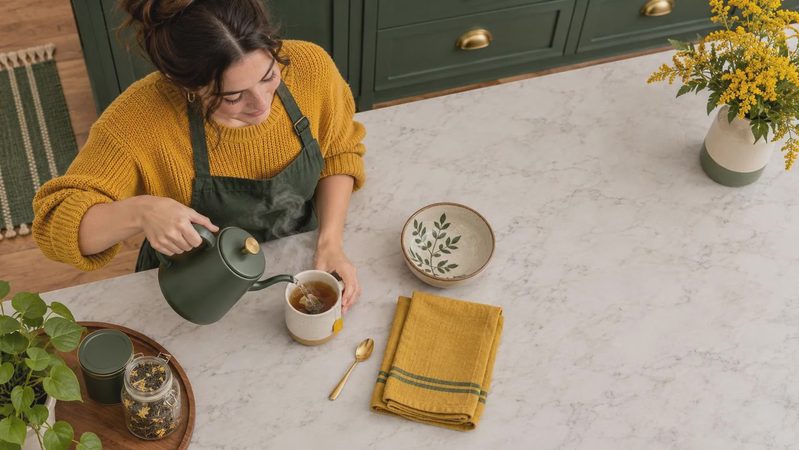
Warm your tea cup with a little hot water if you like, then discard that water before pouring. It can take the chill off the vessel, but it is optional. Avoid pouring boiling water into a cold cup that is not designed for abrupt temperature changes.
Give the tea a moment to become comfortable to drink. Notice its aroma, take a sip, and let the cup be useful rather than precious. A favorite vessel can make a workday pause feel deliberate; a plain mug can do the same job. Every cup has a history. Not every story is true.



No comments yet — be the first to share a thought.