
The short version is that a japanese tea garden roji is the garden approach to a space used for Japanese tea practice. More than a decorative walkway, it helps guests move from the bustle outside toward a gathering with their host. Stepping stones, a waiting place, and a water basin may shape that journey, but there is no single layout every garden must follow.
What makes a japanese tea garden roji different?
Roji is commonly translated as “dewy ground.” In the context of chanoyu, the Japanese practice of preparing and sharing powdered tea, it refers to the garden through which guests approach the tea room. The garden is part of the experience of hospitality: it gives people time to arrive, notice their surroundings, and prepare for an encounter with the host and other guests.
A stroll garden might invite visitors to wander and enjoy changing views. A roji generally has a more focused destination. Its path guides movement toward the tea space, and its features support the gathering rather than simply providing scenery. That distinction is useful, though real gardens do not always fit neatly into categories.
Some roji have an outer garden and an inner garden, separated by a gate. A waiting shelter may offer guests a place to pause before proceeding. The arrangement varies with the site, the school of tea, and the occasion; a small urban tea space need not contain every feature found in a larger garden.
The garden is also a working environment. A host attends to the path and prepares the space for visitors. Water, stone, plants, and gates are not just symbols to decode: they have practical roles in guiding, sheltering, and welcoming people.
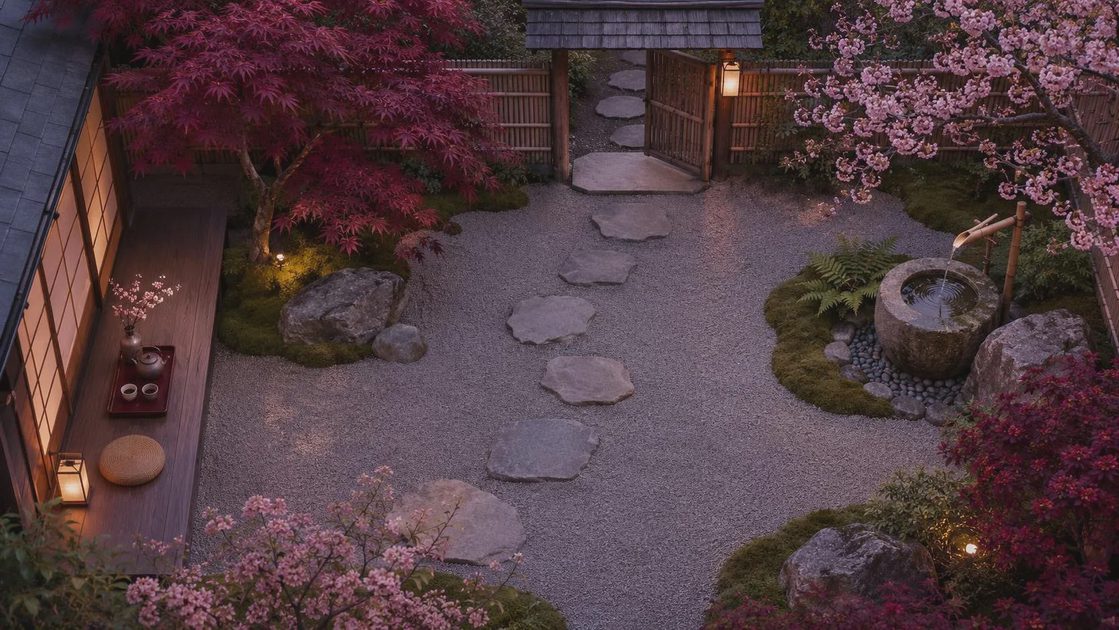
The features you may encounter
Tobi-ishi are stepping stones set into the ground to make a path. Their spacing and placement influence how a visitor walks and where attention falls. Some paths curve or change direction, revealing the tea space gradually. In wet weather, stones can also offer a firmer route than bare earth, although a stone surface can still be slippery.
A tsukubai is an arrangement that includes a low water basin where guests may rinse their hands and mouth before entering the tea room. The practice is associated with preparation and cleansing, but it is not a health treatment or a guarantee that the water is safe to drink. Follow the host’s directions, particularly in a public or historic garden where features may be for viewing rather than use.
Stone lanterns can be part of a roji, providing light or marking a significant place along the route. A gate may signal the transition between garden areas. Neither feature is a mandatory shopping-list item: a lantern placed beside any path does not, by itself, turn that path into a tea garden.
Planting often provides texture, enclosure, and seasonal interest without competing with the gathering. Moss is strongly associated with many tea-garden images, but climate and maintenance matter. In a dry or sunny yard, forcing a moss carpet may be less sensible than choosing locally suitable ground cover and keeping the path clear.
How the tradition developed
The roji took shape alongside the development of chanoyu in Japan. By the sixteenth century, tea practice included influential approaches that valued restraint and carefully considered simplicity. The tea master Sen no Rikyu is closely associated with the development of wabi-oriented tea, though it would be misleading to credit one person with inventing every feature of the tea garden.
Wabi, in this setting, is often connected with an appreciation of modesty and simplicity. That does not mean a tea garden is neglected or effortless. A seemingly quiet arrangement can require skilled design, regular care, and attention to the needs of guests.

Popular accounts sometimes treat the garden as a timeless escape from society. The historical record is less tidy. Tea gatherings also involved social relationships, patronage, and carefully chosen objects. The garden could create a sense of separation from ordinary activity while remaining part of a specific social and cultural world.
How to experience a roji as a guest
If you are invited to a tea gathering, let the host or organizer explain the route and any expected gestures. Pause where directed, watch how others proceed, and ask a quiet question if you are unsure. You do not need to master a set of unfamiliar movements before accepting hospitality.
At a garden open to visitors, stay on designated paths and treat basins, gates, and structures as historic or maintained features rather than props. A basin you can see may not be one you are invited to use. Photography rules and access can differ by site, so look for posted guidance.
Pay attention to the sequence rather than searching for a hidden meaning in every stone. Notice where a path slows you down, where a view opens, and how the sound or texture underfoot changes. Those observations can tell you more about the garden’s role than a checklist of objects.
Borrowing the idea at home
You do not need a tea house or a Japanese-style garden to learn from the roji. Choose a short route to the place where you make or drink tea. Clear it of clutter, make the footing secure, and give yourself a moment to pause before sitting down. Even a transition from a kitchen counter to a chair by a window can become a useful boundary in a busy day.
If you have outdoor space, consider a simple, stable path and plants suited to your local conditions. Avoid placing loose stones where they could tip, and plan for an accessible route if you or your guests need one. A bowl of water or a lantern is optional; neither is necessary to make a welcoming place.
I find the most useful lesson is not to reproduce a ceremony without context, but to think about arrival as part of hospitality. You can appreciate the ritual without performing expertise, while recognizing that a home adaptation is an inspiration from a living tradition, not a substitute for learning it.




No comments yet — be the first to share a thought.